Here from about the 12th of February will be the travel blog of deepest darkest Amazonian lands, in search of exotic critters. Please peruse often.
The wait is over
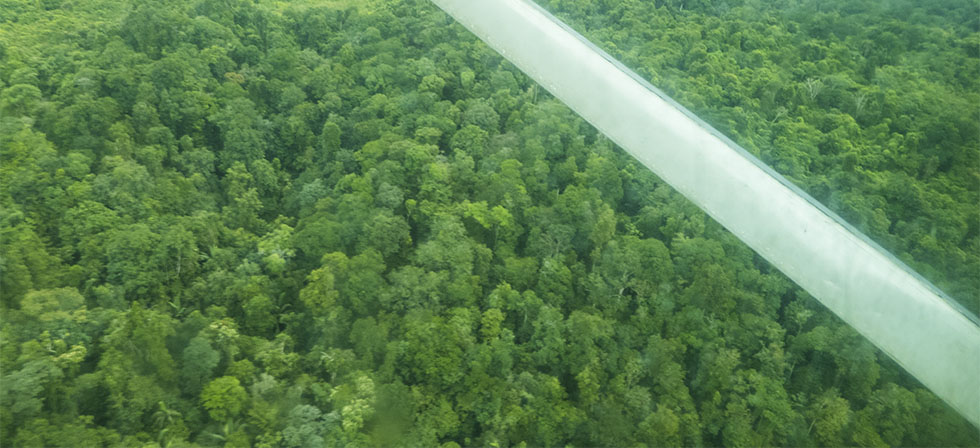
Well day 2 here in the real jungle. After 4 days of on again – off again long airport times, and aeroplane times – 7 flights from Australia. Guyana is about one and half Tasmanias, and amazingly, flying over more than half of it yesterday, it is mostly real jungle. Even, (destructive) Brazil, would be hard pressed to show this much wilderness.
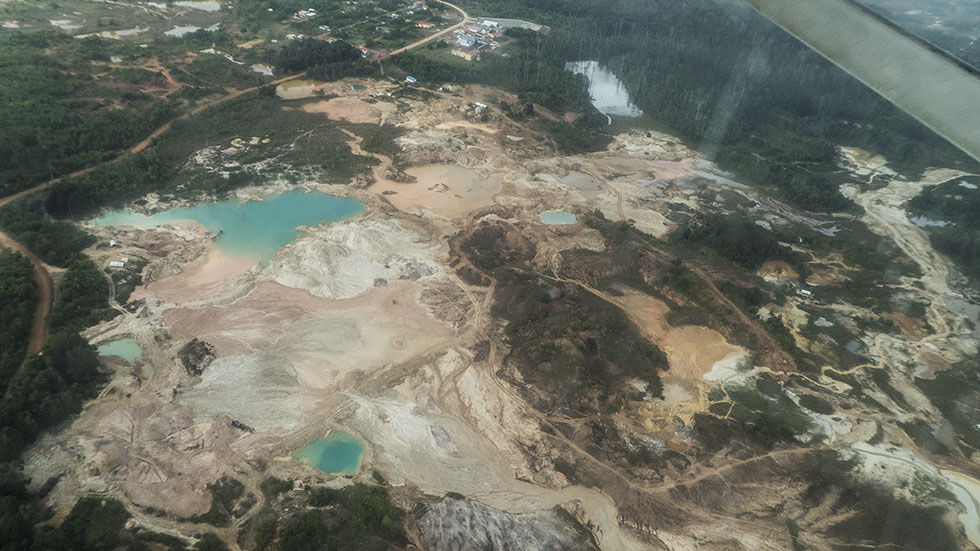
There is devil in the detail of course – humans doing very messy gold and diamond mining, not in one big hole like mining companies, but by strip mining the landscape slowly by hand. This destruction combined with serious poisoning by using mercury to separate the gold, results in big blobs of these hellish wastelands.
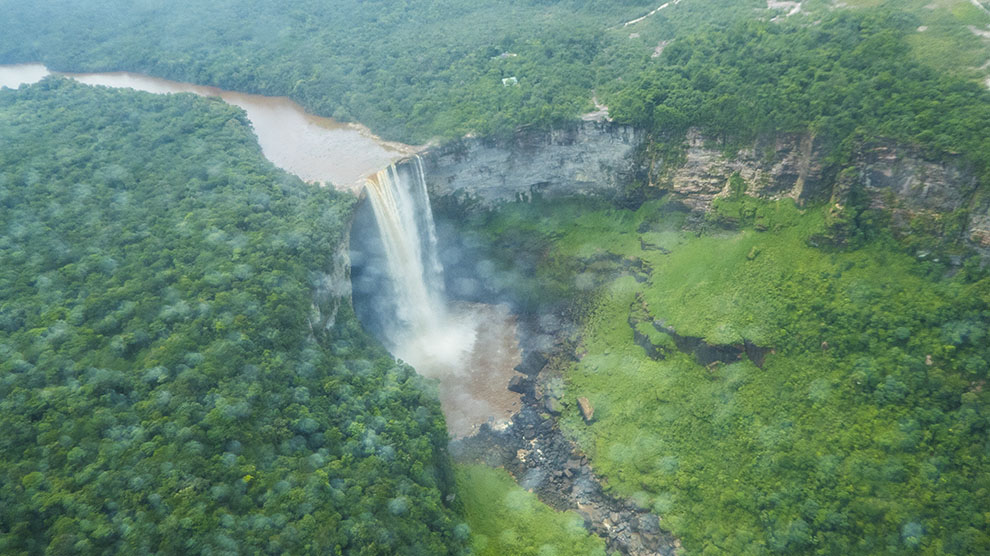
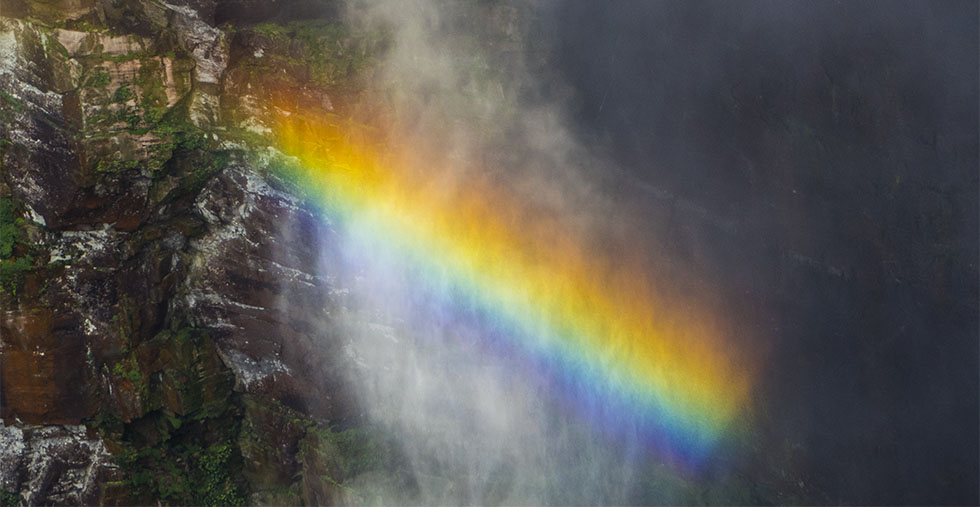
Here is where the flat country rises into high country, and here is where the, claimed, world’s tallest single drop waterfall does its thing – the Kaieteur Falls, all 226 metres. The full span only visible from the air or by climbing down to the valley. Pretty shmick, and it makes a rainbow show across the immense spray clouds.
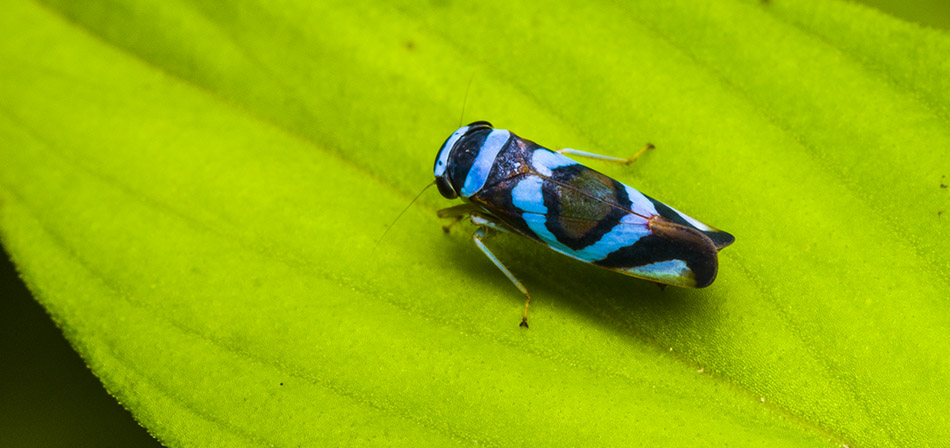
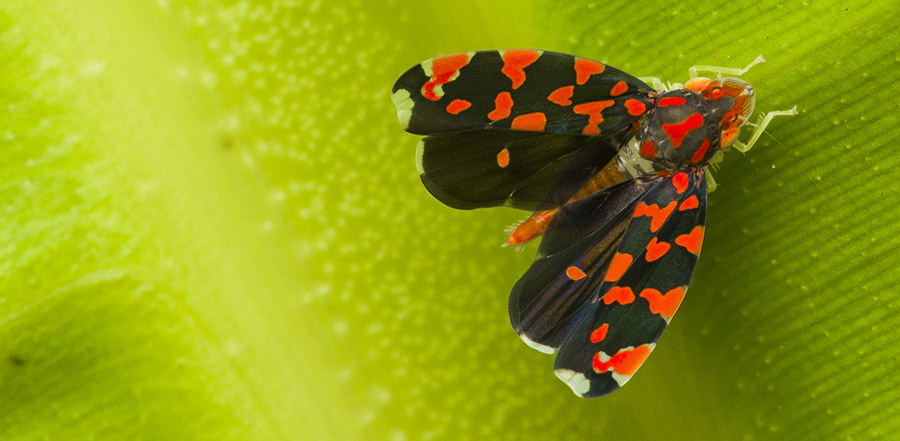
First walk in this area found mr blue – a Cicadellid hopper
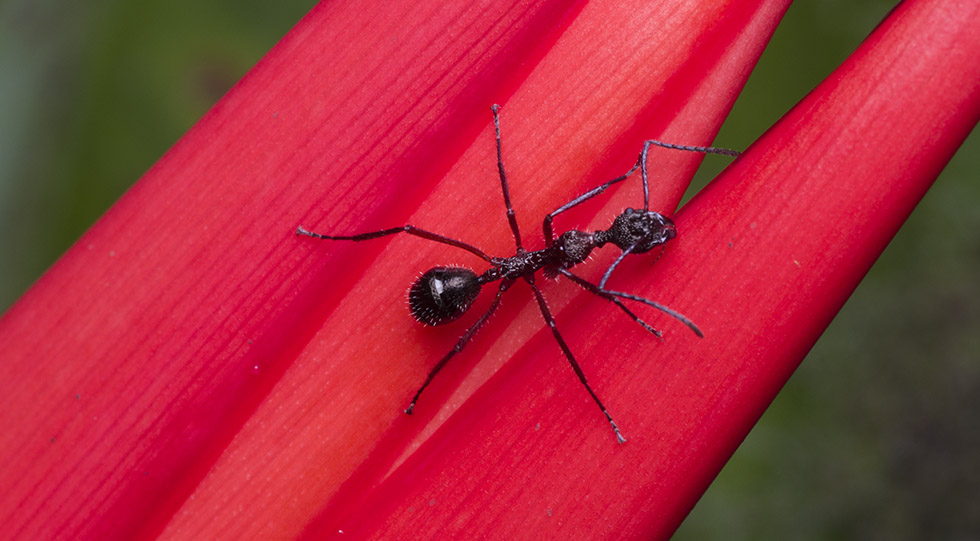
followed by ant obliging by putting on a great backdrop show of a Heliconia flower…
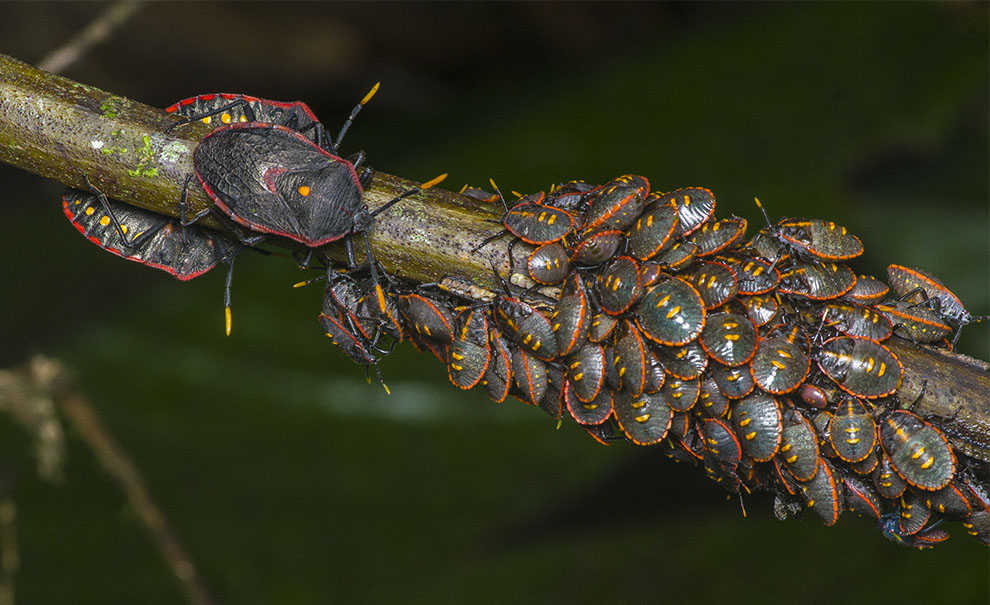
and a family of Pentatomid bugs, 3 mothers guarding their many babies
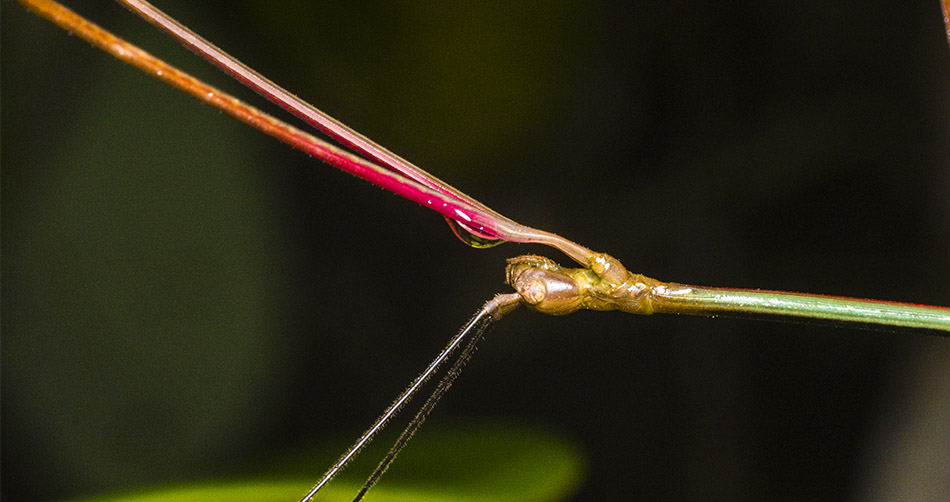
First day ended with a night walk, seeing the other shift of local critters. Many froggies, stick insects and crickets among them. See a close up of a very skinny and nicely hued stick insect
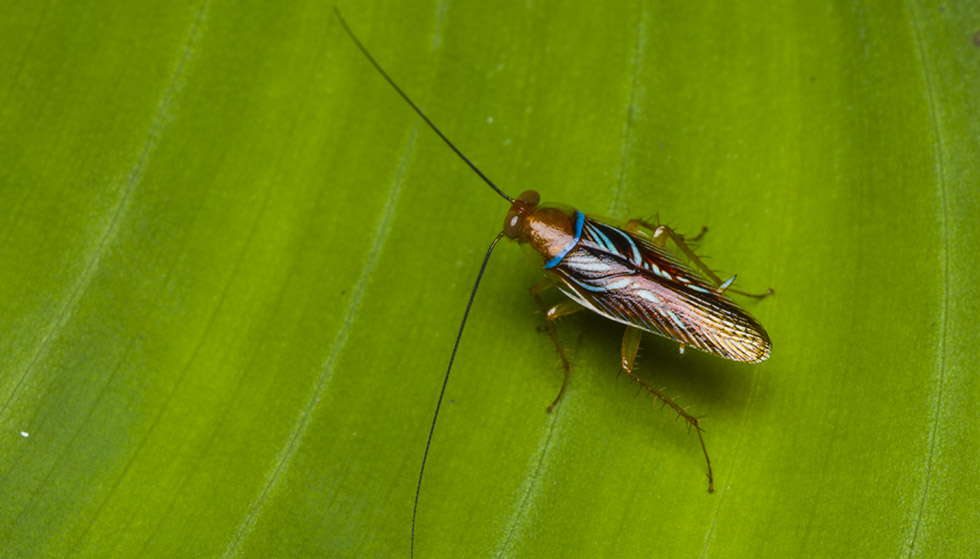
and even a roach is beautiful in this forest..
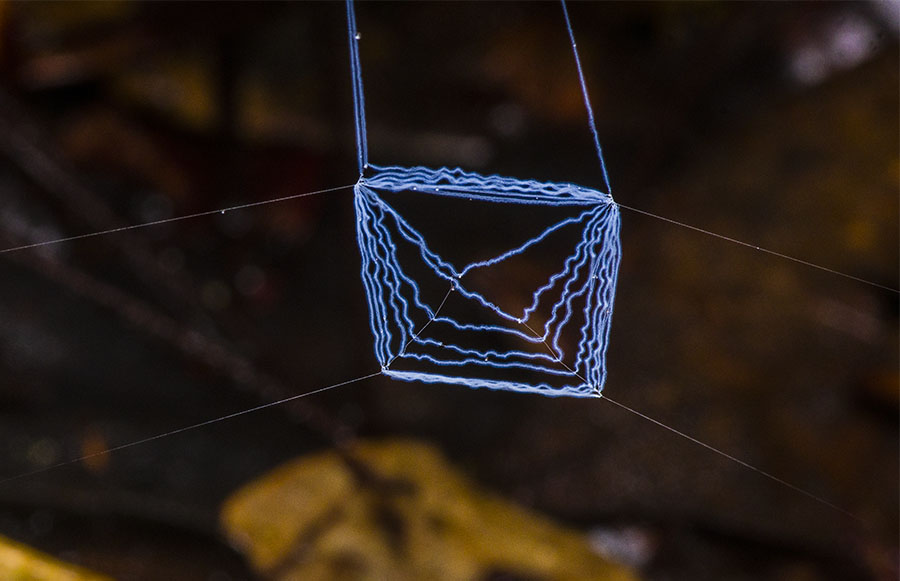
but the most fun thing was a Net Casting spider. They hang upside down and hold onto the 4 edges of this glow-blue square net which they cast at passing prey, like cast fisherpersons.
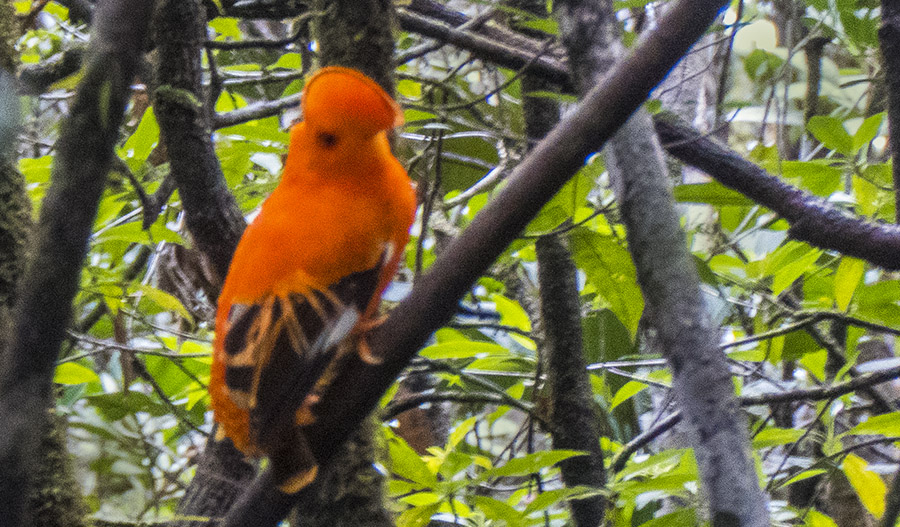
DAY 3 – Next day started with the pea-souper fog to end all fogs. All the little planes that deliver tourists here could not come till the arvo. They come on day trips to see the giant waterfall, but also to see an amazing bird that is emblematic of this part of amazonia – the cock-of-the-rock. Guide took me to the area the males gather and ‘lek’ – show off their stuff. Here a not so good pic from long way off…
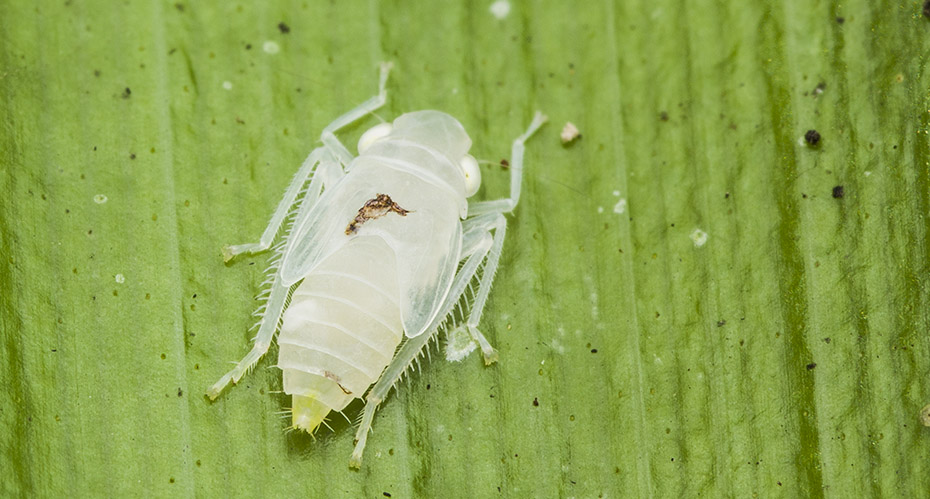
On the insect side see this subtle almost translucent eeny weeny hopper baby that found my camera
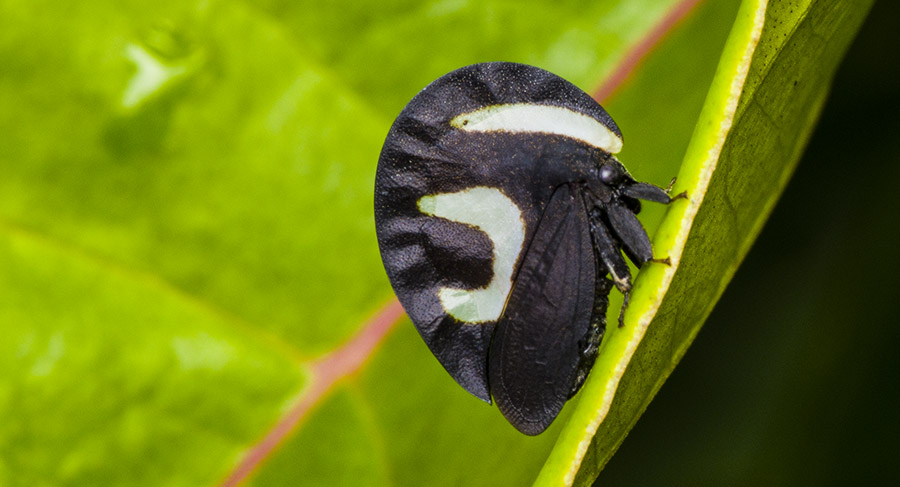
and this anti translucent handsome and weird Membracid hopper dude – quite a helmet…
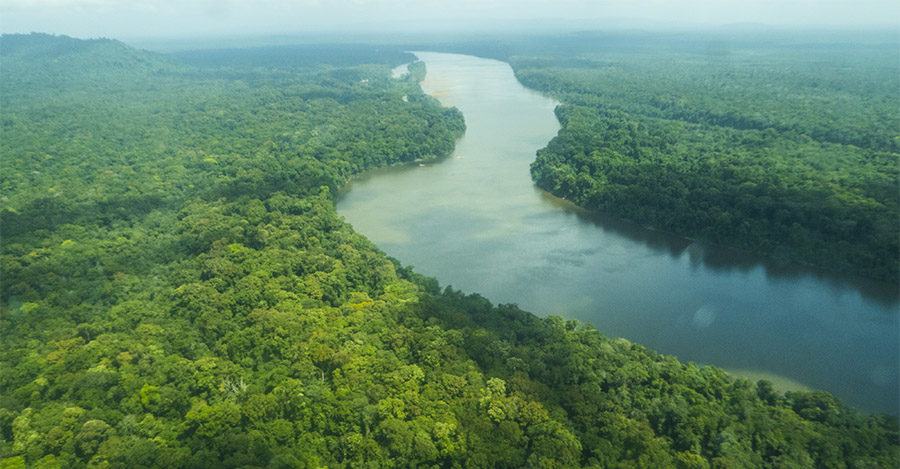
DAY 4 – leaving the highlands and the waterfall, by delexe huge plane which bounces through the air pretty close to the immense forest, until arriving at next lodge on the banks of this river below

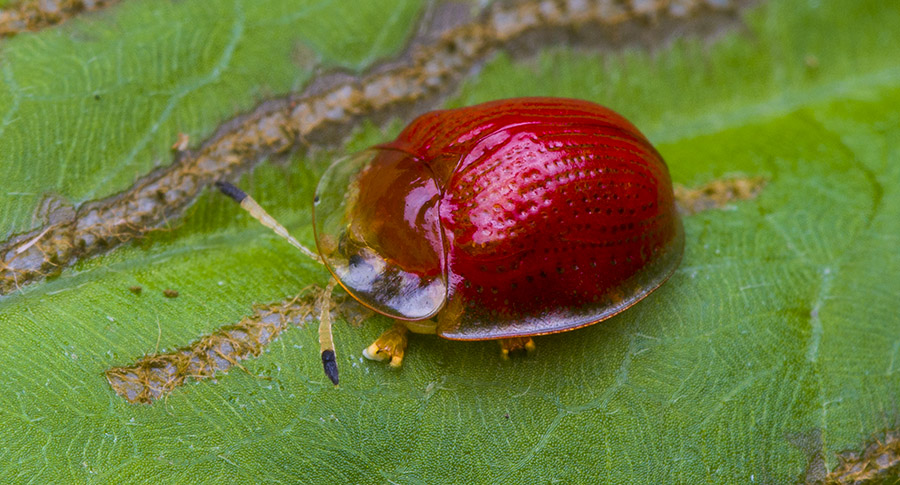
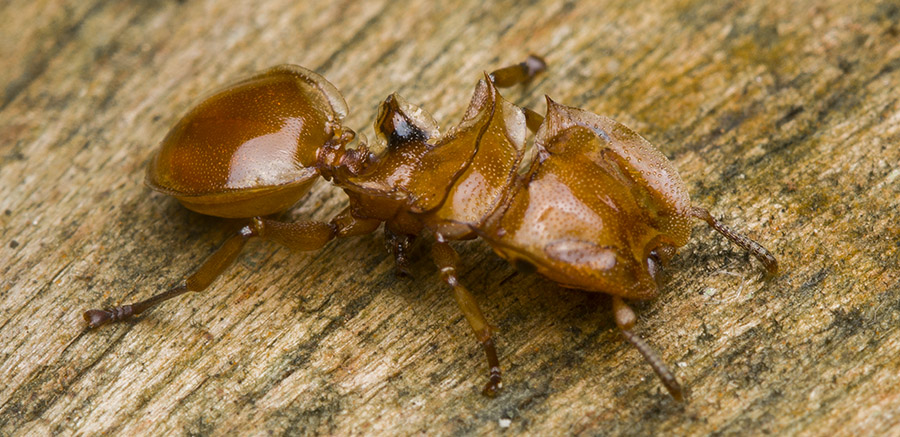
First forest walk here, in the hotter humider jungle, saw two of one of my fav insects, the tortoise beetles, note the see through shell at the head end
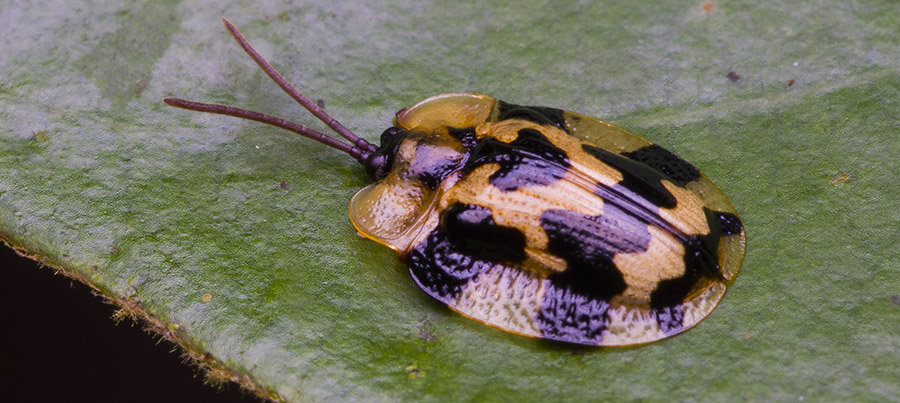
and this show-off hopper
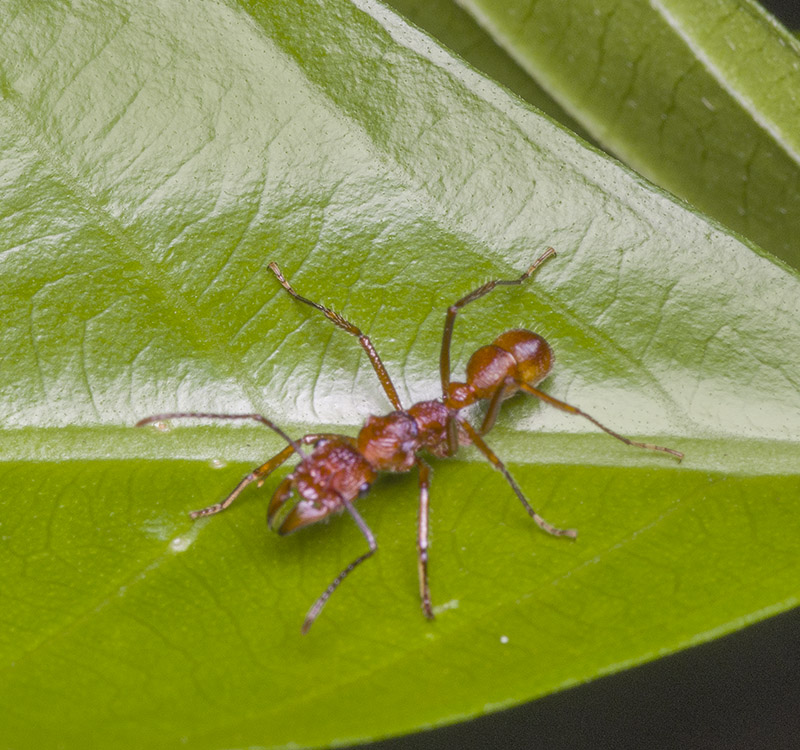
and an honorary mention for this very odd flat headed and flat bum ant
Day 5 or 6 – starting to lose calendar function of brain
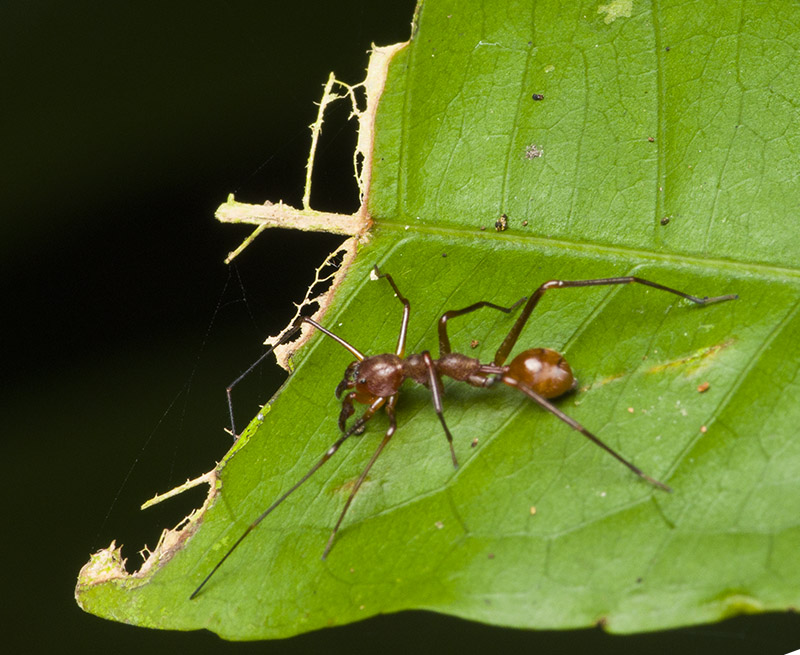
Very sticky eecky long walk in the forest saw only a few honorable mentions. Starting with a fav subject – mimicry. See below, which dude is which, ant or spider…
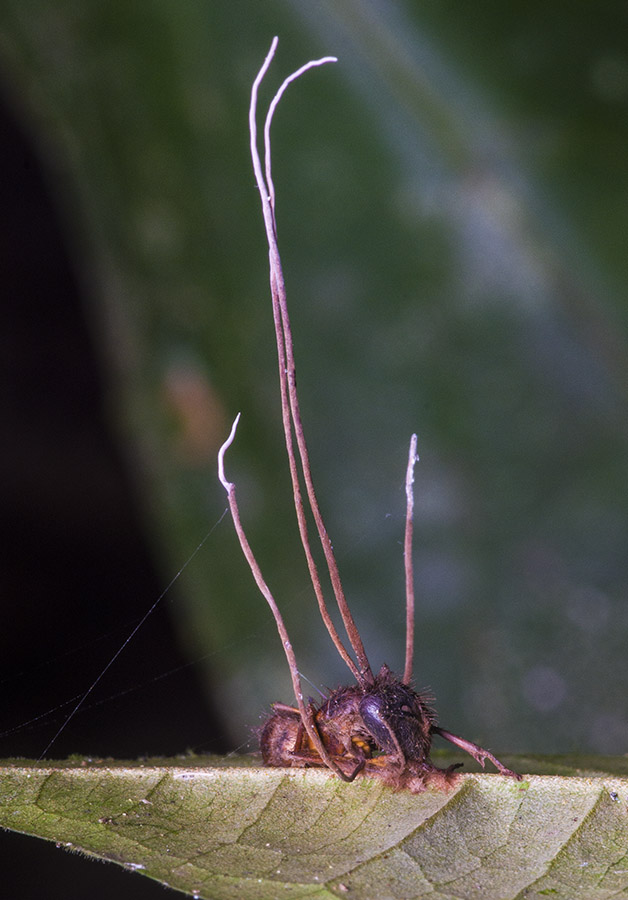
and then is the other fav subject – murder fungus. This little nasty lands spores on ants and other insects, which then form hyphae which penetrate the exoskeleton of the critter and grow inside. When ready to reproduce, it convinces (really) the poor insect to climb high and kills it there, carefully gluing it to the spot. Then it sprouts mushroooms that again release spores, from a nice height, to travel further. See ex-ant and the lovely mushrooms what crashed out of its body…
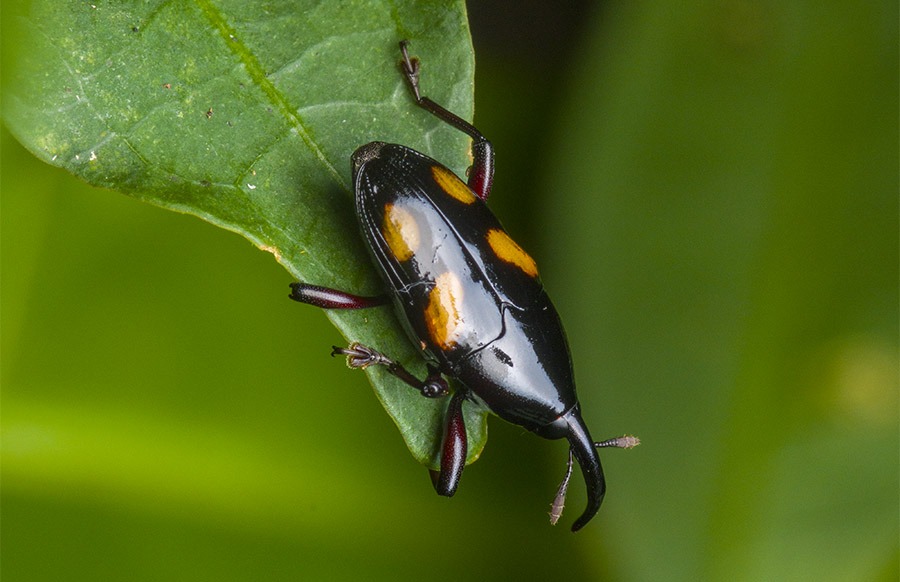
and see this lovely weevil dude, with a sheen that could challenge the best patent leather dancing shoes. If any of you can remember that old fad – google it.
Day 6 or so
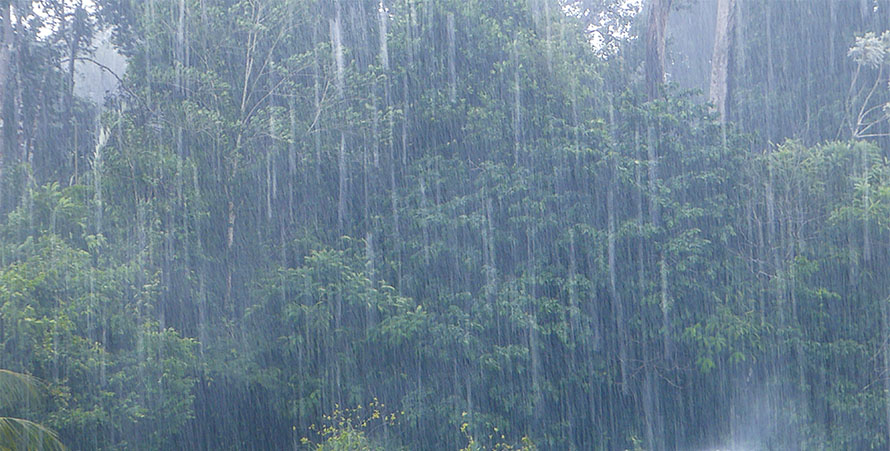
Another super duper oh-mi-god rain event last night. My cabin actually shudders under the impact of the very large drop vertical cascade – no shower head filter, the cloud just dumps the load.
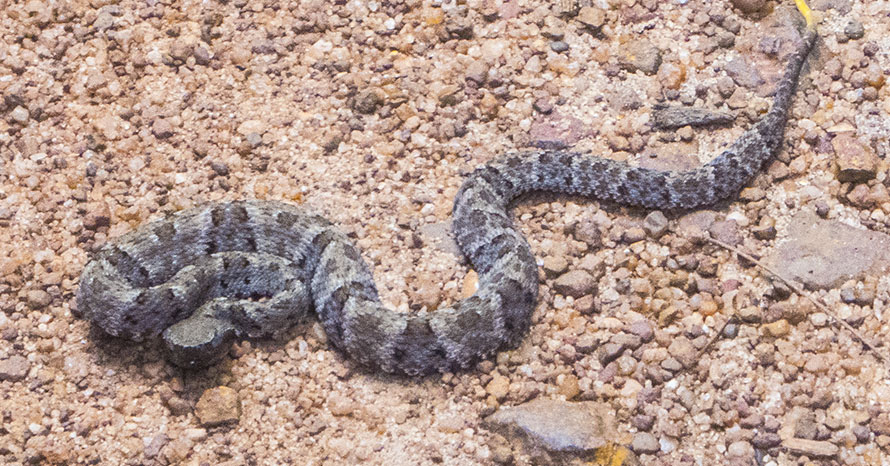
Next morning on the road a cute baby snake with attitude stood its ground and lashed out – and it turns out it was the legendary fur-de-lance, one of the deadliest snakes on our planet.
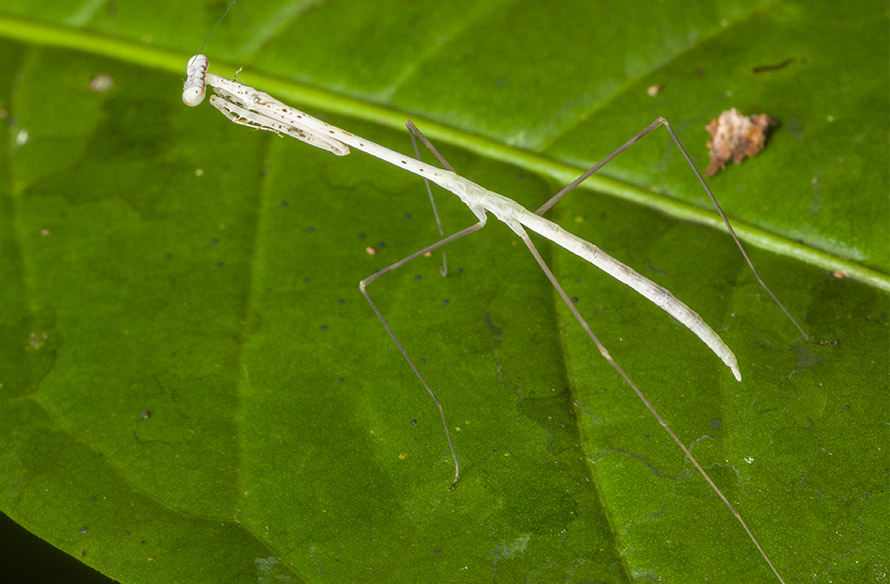
On the insect side, the skinniest (and whitest) parying mantis pranced about
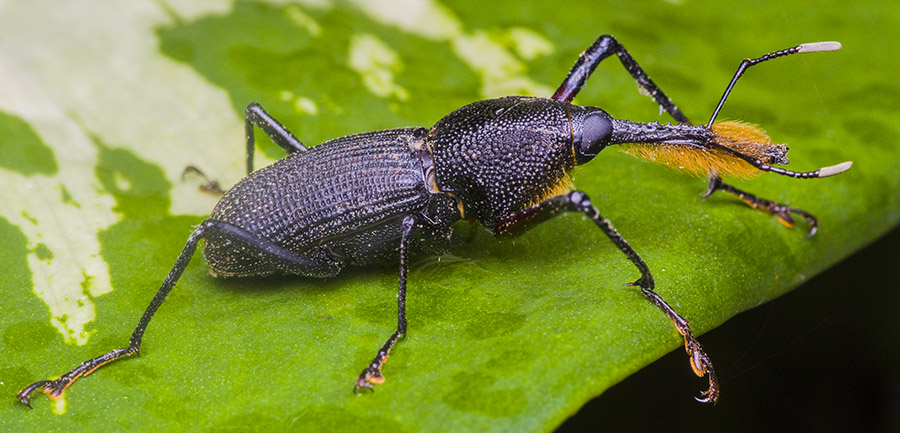
and it is time again for a real mr weevil. This one has cultivated a grand moustache, and a small beard
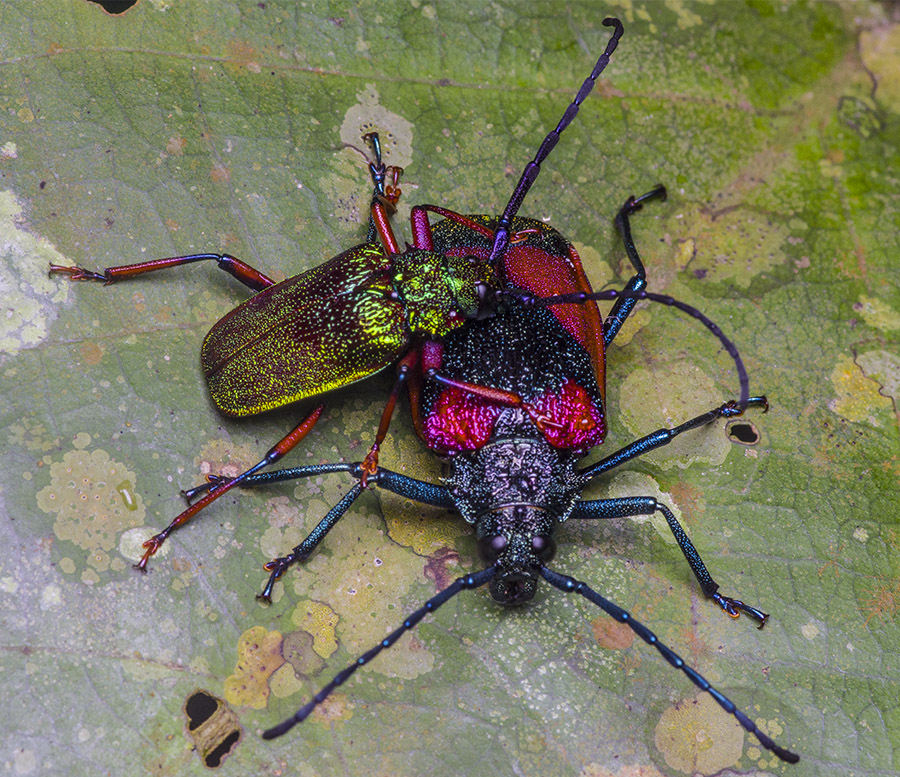
but all this is really leading up to the grand discovery, the reward for spending 6 hours a day in the sauna madness hot jungle, sweating and trudging, searching for insectoids. Every few days a really super schmick creature just happens to be in my path. Here a big female and different coloured small male longicorn beetle
DAY 7 0r 8 0r..
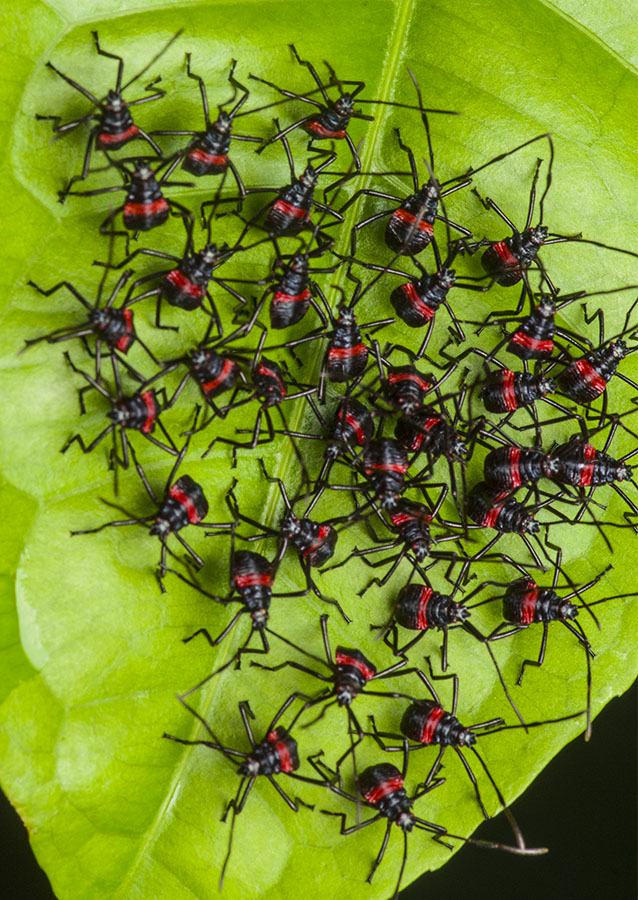
On the trail again, found a few cuties. See this fun family of just hatched Pentatomid bugs not quite deciding when they should spread out and get on with it.
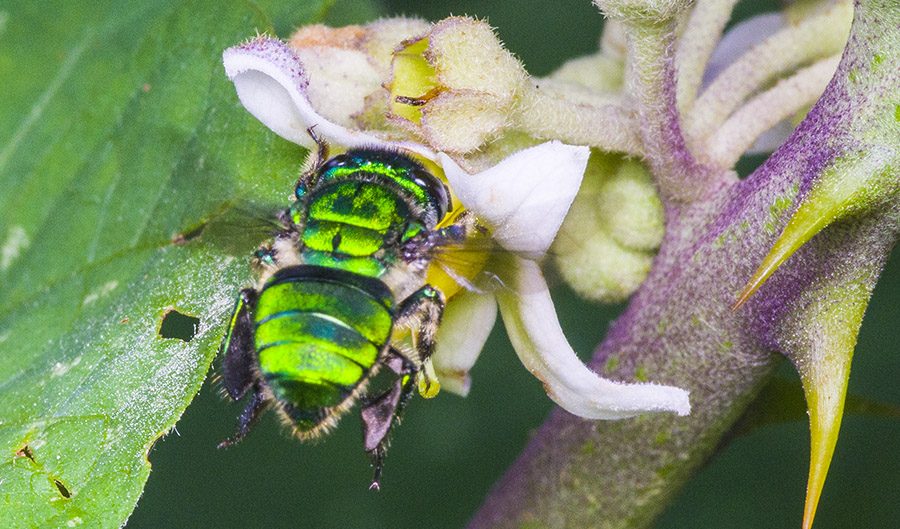
and on the edge of the forest, where a few flowers live, see the fab orchid bee male. These are the fabled bees which collect various and odd scents, mix them in special pouches, and then present them to the females for inspection and jigijigi permission.
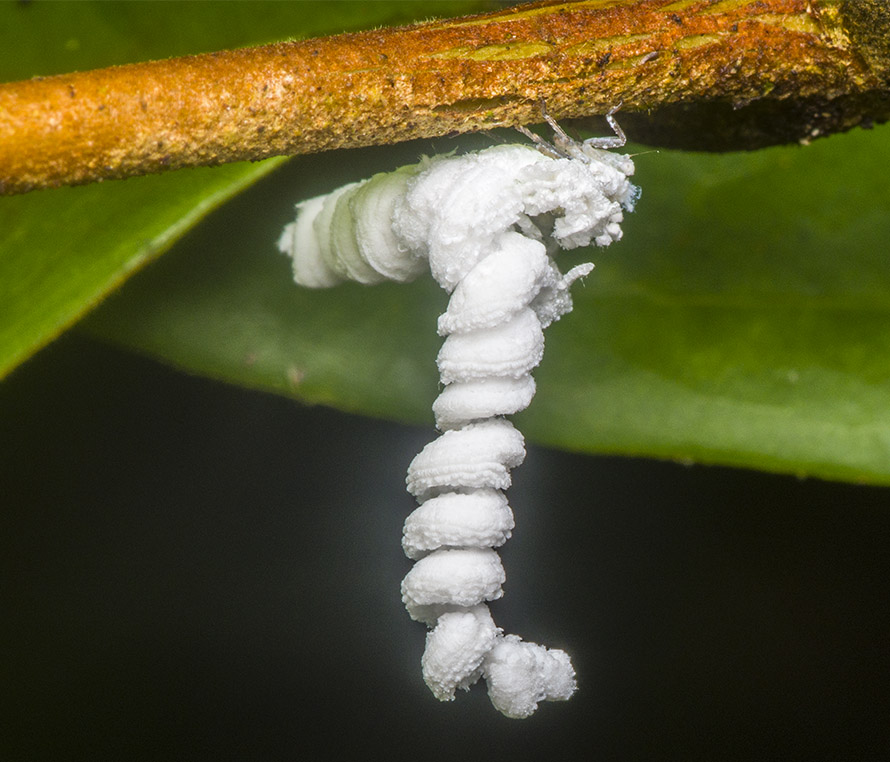
but if you prefer the strange to the beautiful, you cant go past the next candidate. First of all find its little feet – it is upside down so look at the branch above the weirdness. It’s body is only about 10% of this madness, and all the rest is wax it has created from plant juices it drinks all day. Predators do not know what the hell to make of this cute mess. It is probably a nymph of a Flatid hopper
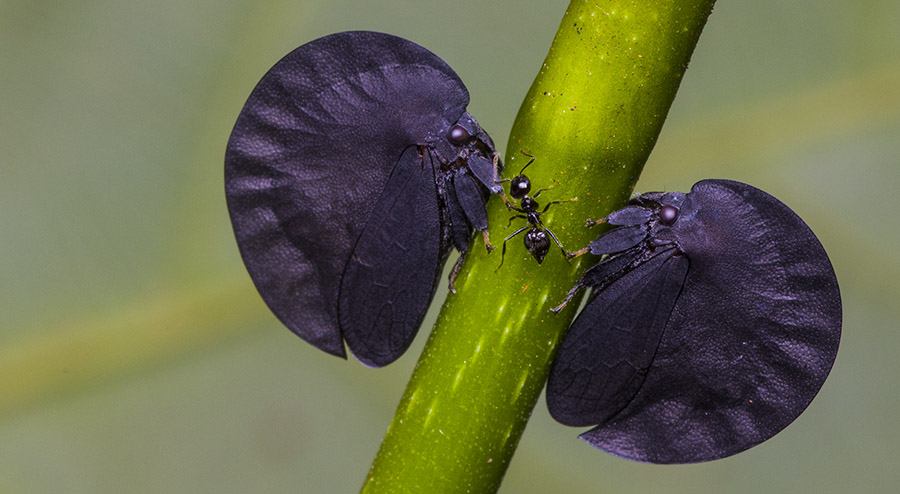
and lastly for today, two Membracid hoppers, with their beaks stabbed into the plant, drinking its sweet juices, and having a chin wag about the state of the world. Little ant listening in…
Day 8 ish
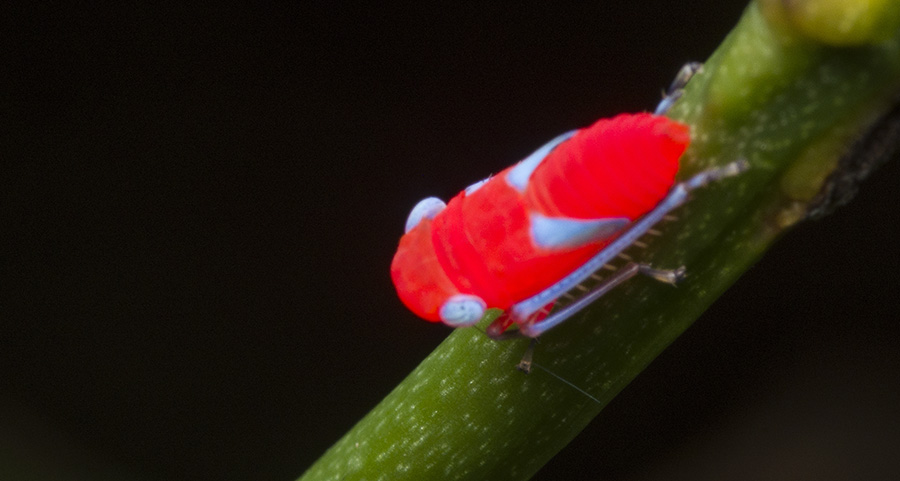
today a verrry small critter caught my attention, the 3mm long baby Cicadellid hopper with a lot of show-off attitude
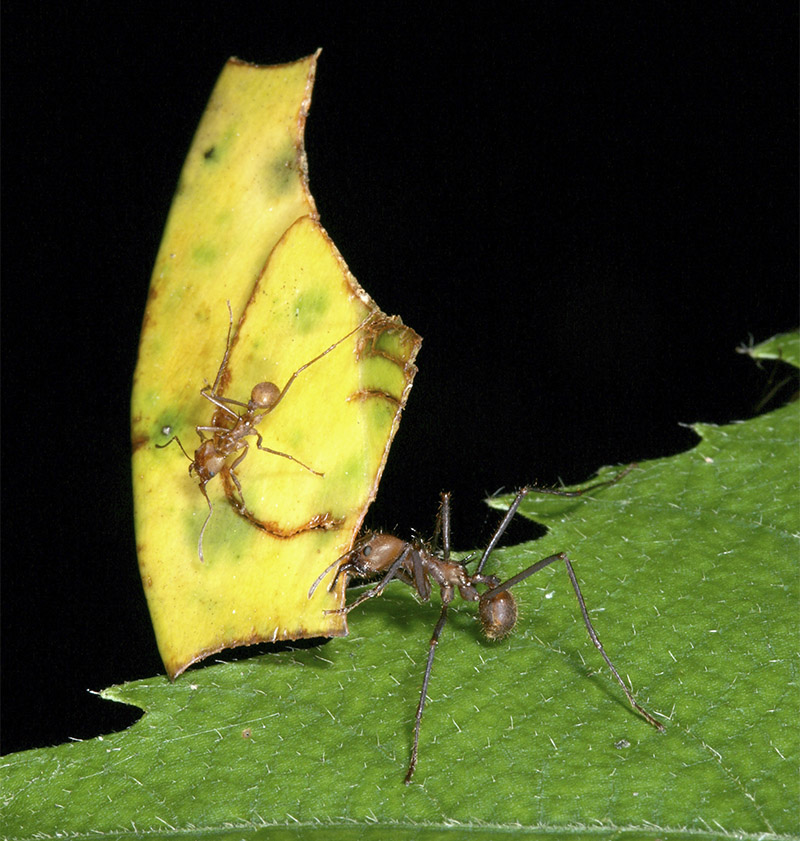
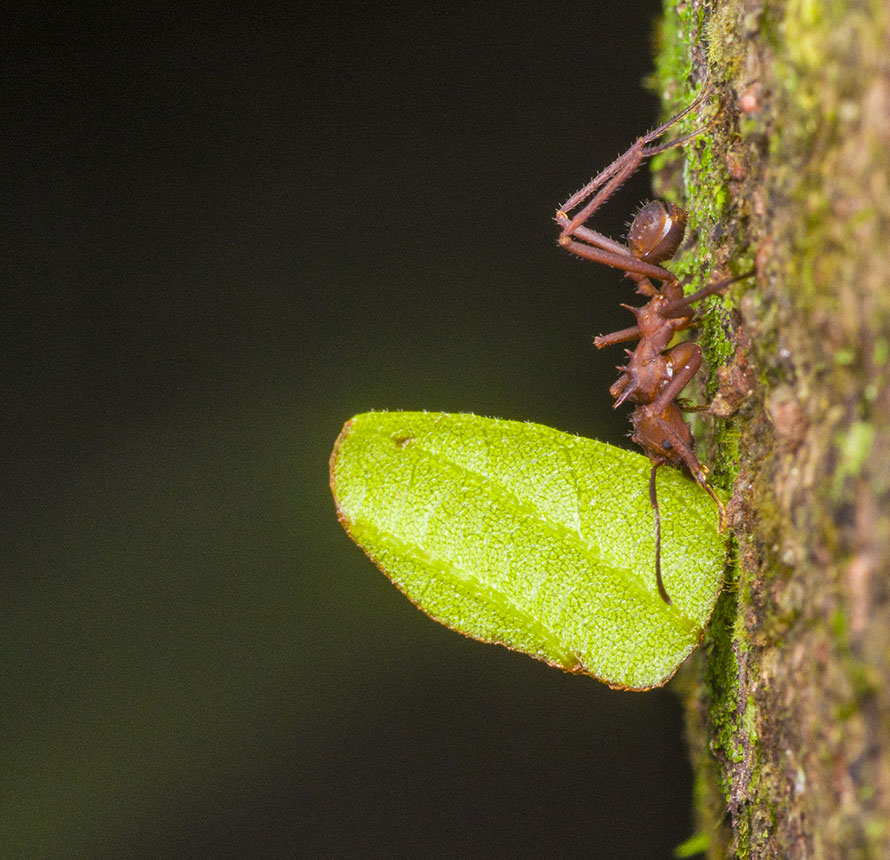
and at night the local leaf cutter ants were active. They are unrelenting workers, with bigger workers cutting bits of leaves and smaller workrs carrying the teetering loads to giganticus nests, which can have literally millions of minions. There it is not the leaves they eat, but a fungus they grow on the leaves in large garden caverns.
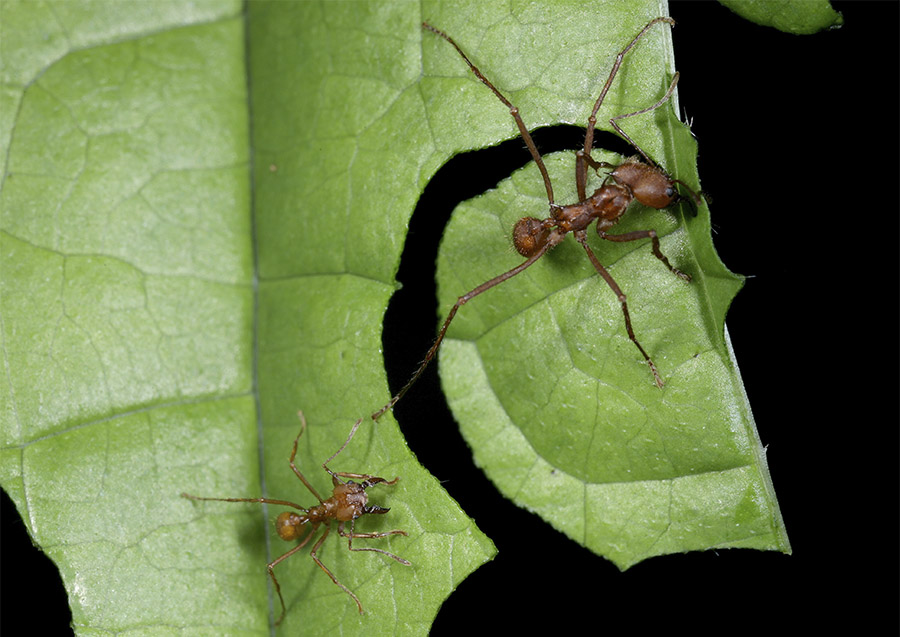
and sometimes even smaller workers ride on the leaf to protect the carrier from parasitic flies that hover near the ant trails.
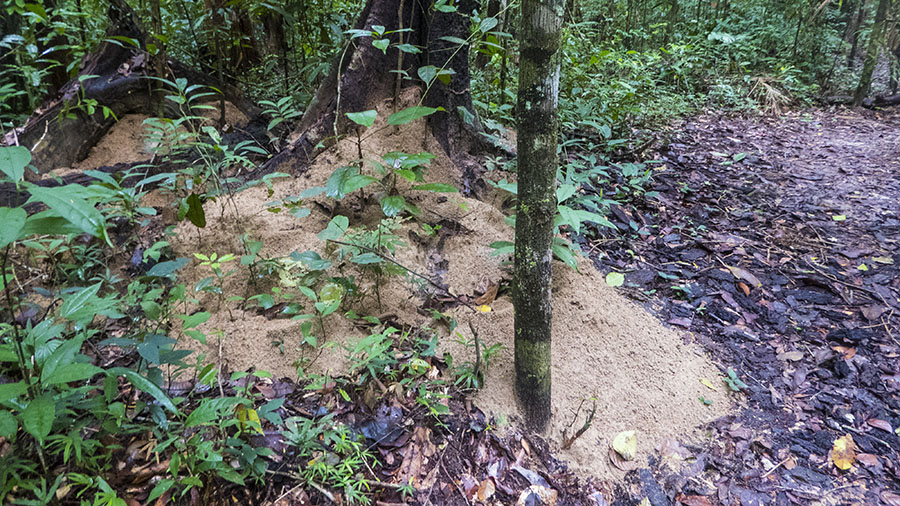
and the top of a monster nest… 3 or more metres deep
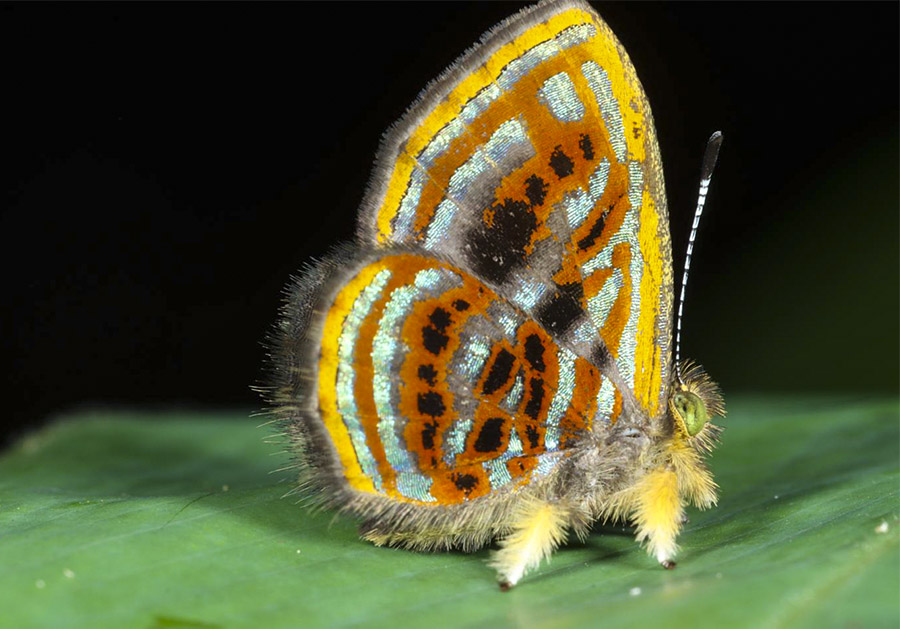
to end the day here be a very schmick butterfly, Sarota acanthus, in the Riodinidae Family, one not frequenting Oz. And even though it is so very hot here, it has fabulous leg warmers…
Day 7 or 8 ish
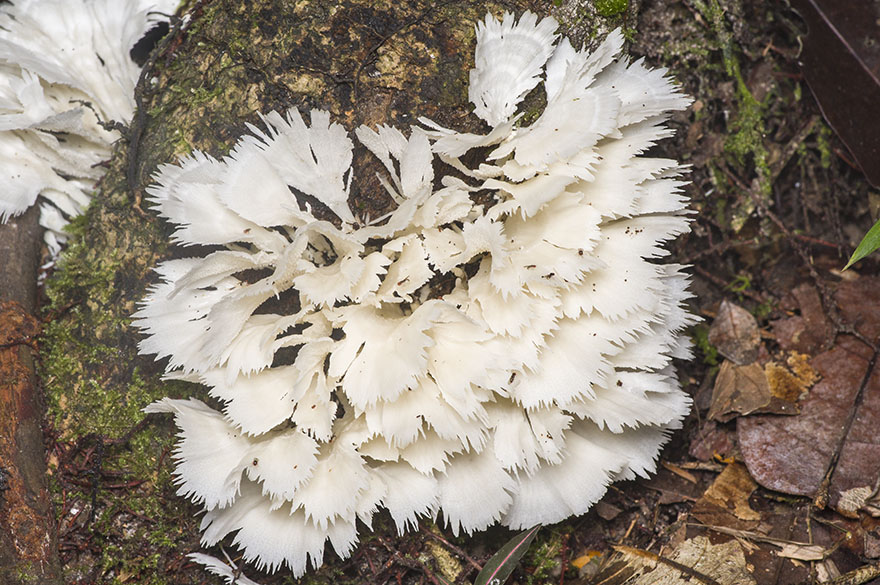
Fungus. Look at this oddly serrated pure white species
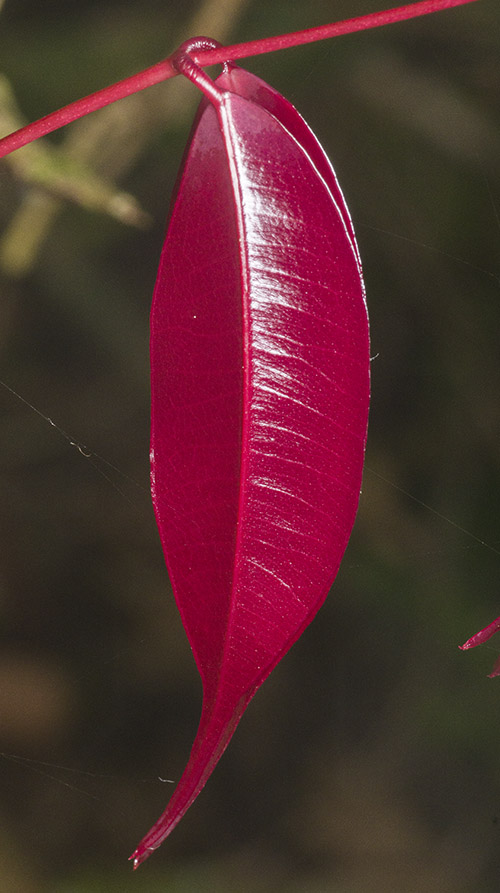
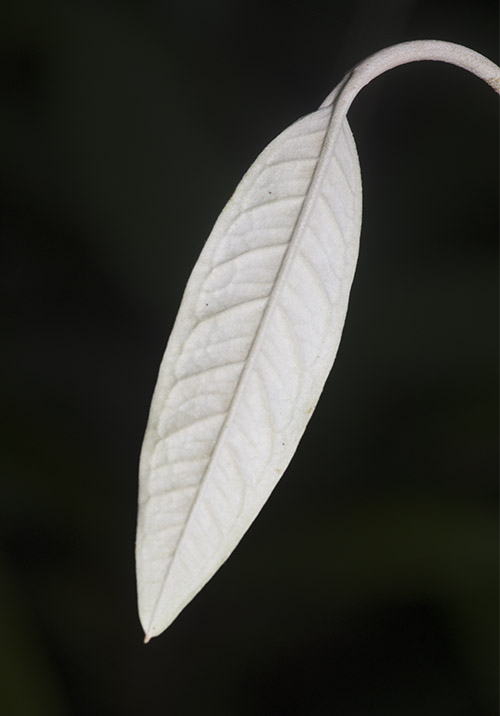
Lets talk about leaves. Rainforests have the same deep green hued leaves on all the ground level plants. It makes ID of these saplings very hard as nothing stands out. But when it is time to invest in new leaves, the babies have all manner of stand out colours from yellow to pink to – well it is first time I have a seen a white leaf too…
Day 10
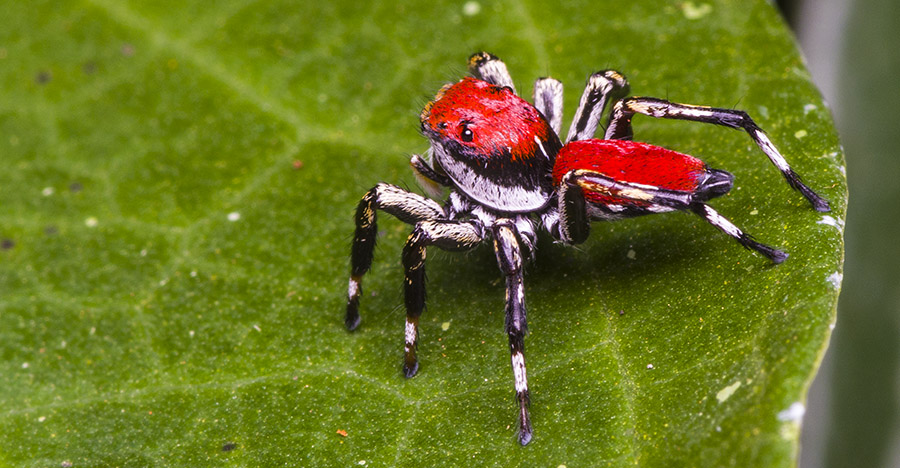
Have moved from the very posh big Iwokrama lodge to a smaller cuter more foresty, Atta lodge. Straight away more insects seem to reside here away from the hustle and bustle of big tourism. See the very handsome jumping spider
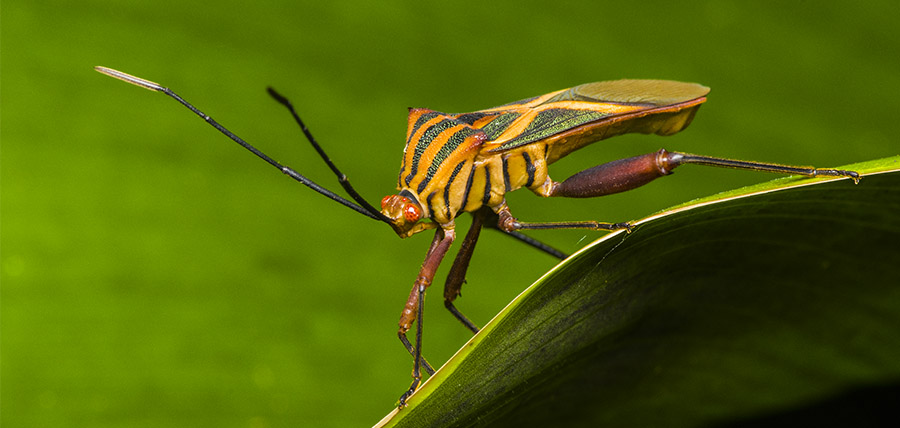
and a posing crusader bug
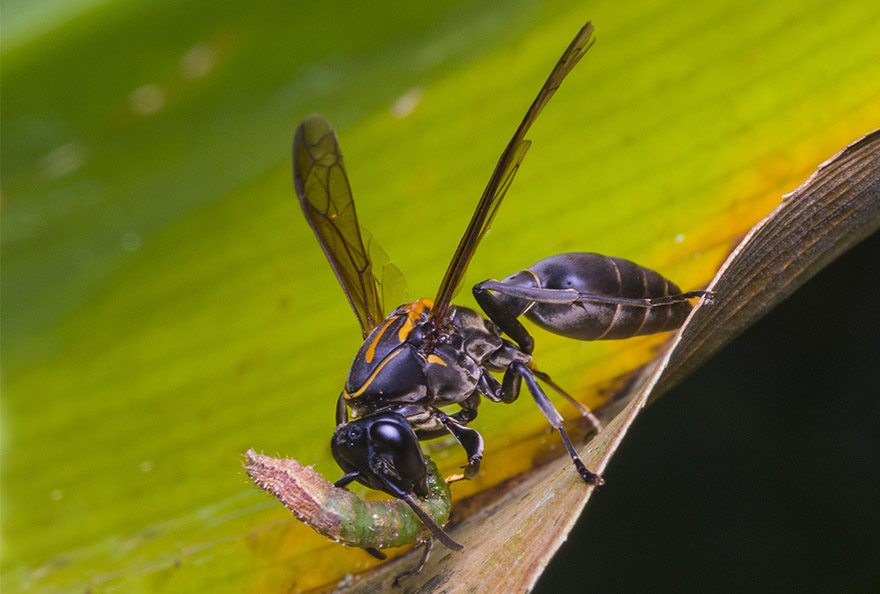
and a bit of the old tooth and claw story, here a paper wasp mushing a poor caterpillar that will be taken back to the nest to feed the babies
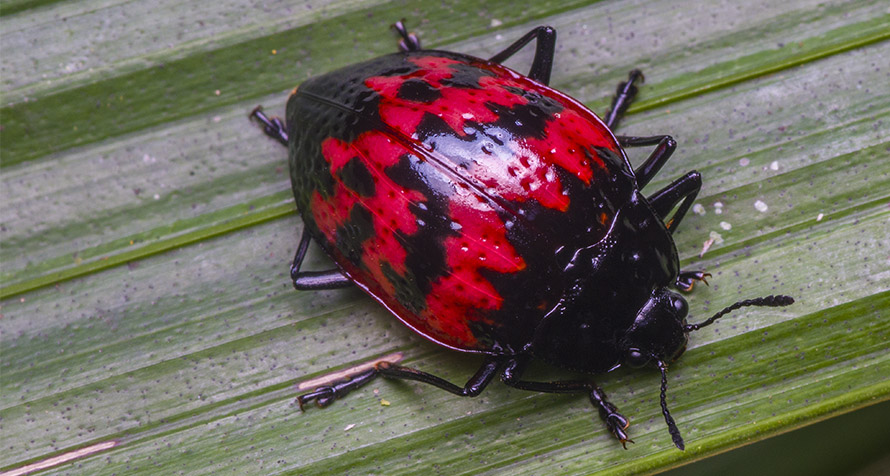
and round off the day with a spiffy fungus beetle showing off
so gird you loins and prepare for a surprise. THE amazonian iconic bird, the very large red and green Macaw, is normally only seen as a pair flying across a bit of sky seen from the forest floor. But today the Very raucous (sulphur crested cockatoos eat you heart out) came to play on a tree in our camp clearing. See my not so perfect pics of the darlings
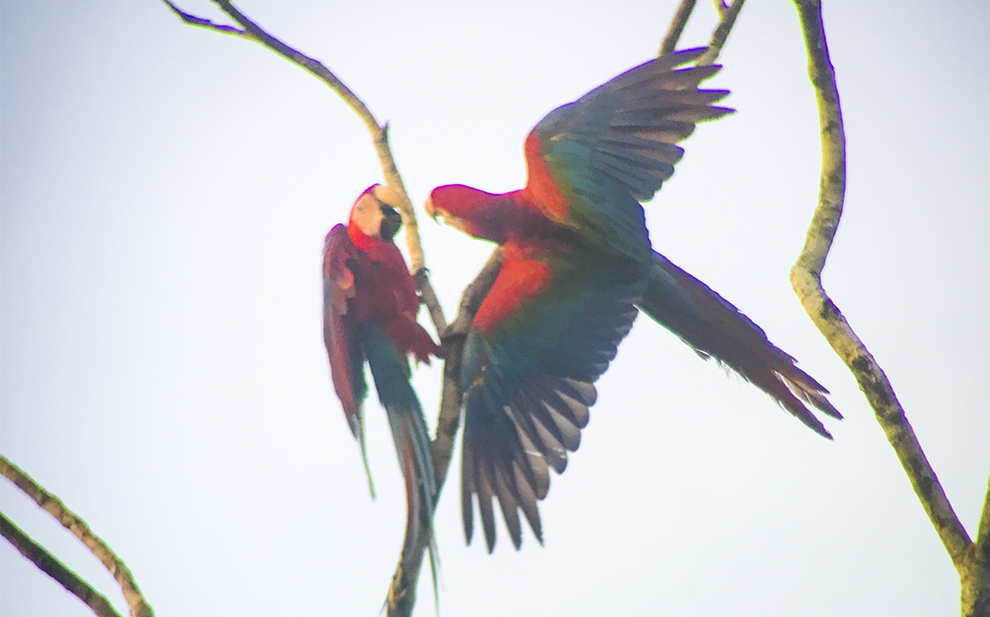
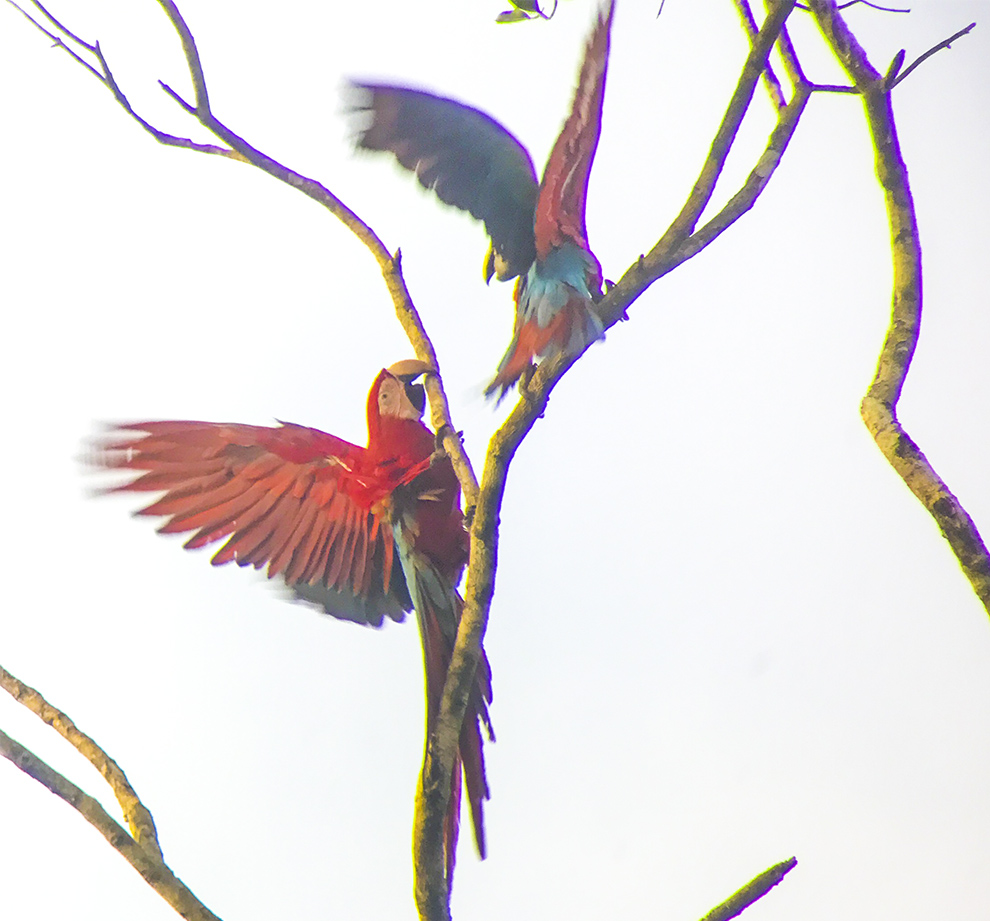
wowski !!
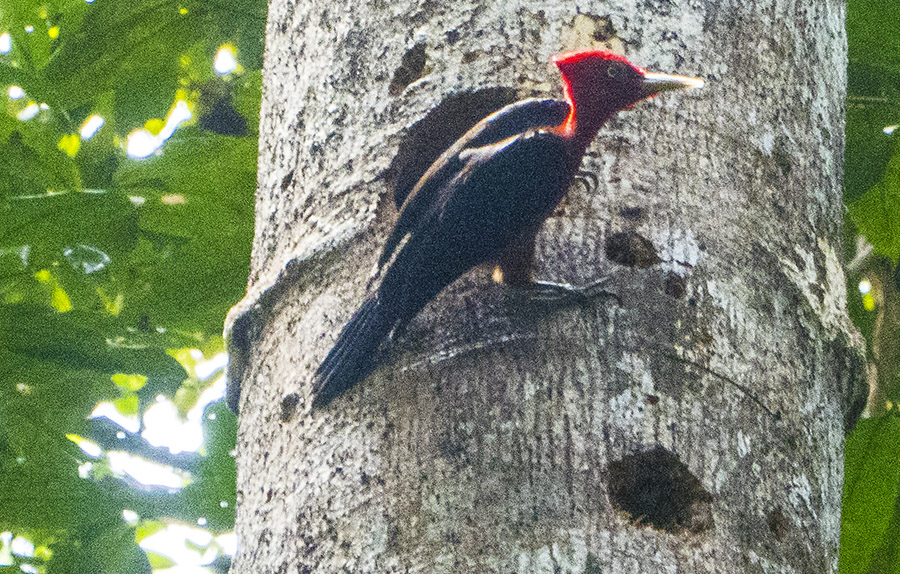
so while we are playing with non six legged creatures, another something spacial happened today. Australia does not have woodpeckers, very sad. They are such iconic and mythical creatures, and I always hope to spot one while overseas. So here I found WoodyWoodpecker high up a tree preparing a nesting hole. Camera at limit of what is possible, so nasty picture alas…
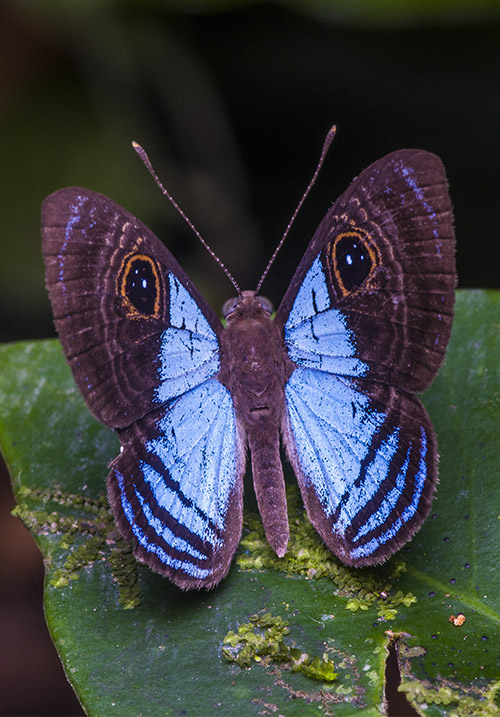
back to the six legs, a flutterby that normally does not pose, chose to allow itself a bit of fame
Day 14 or so – still in small forest lodge called Atta
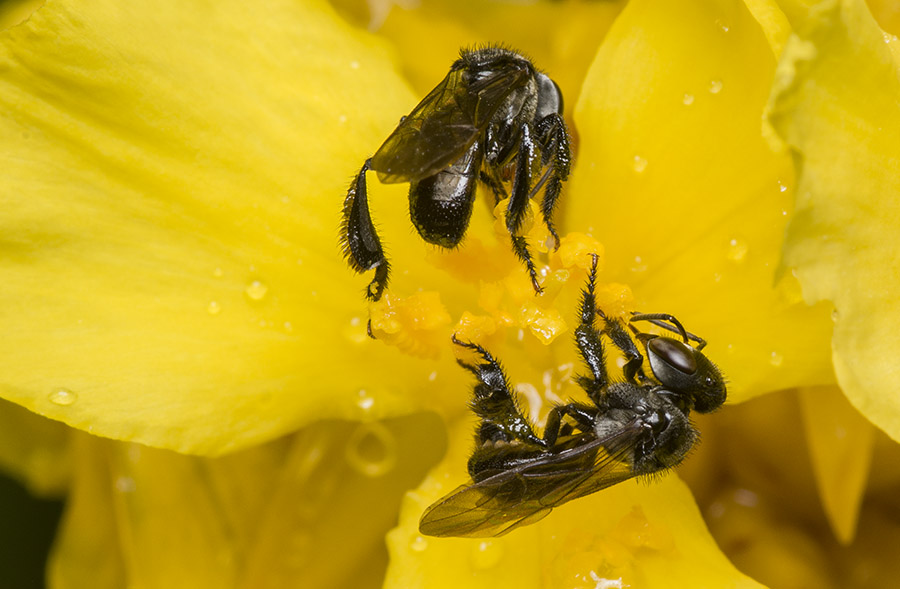
A disturbing story today dear readers. We all know little eeny weeny black bees called Stingless Bees, and Sweat bees, working away to produce a nice runny honey, and no more than licking us when we come upon them. They are cousins of honey bees, and have a lot of species, especially in South America. See first typical nice critters…
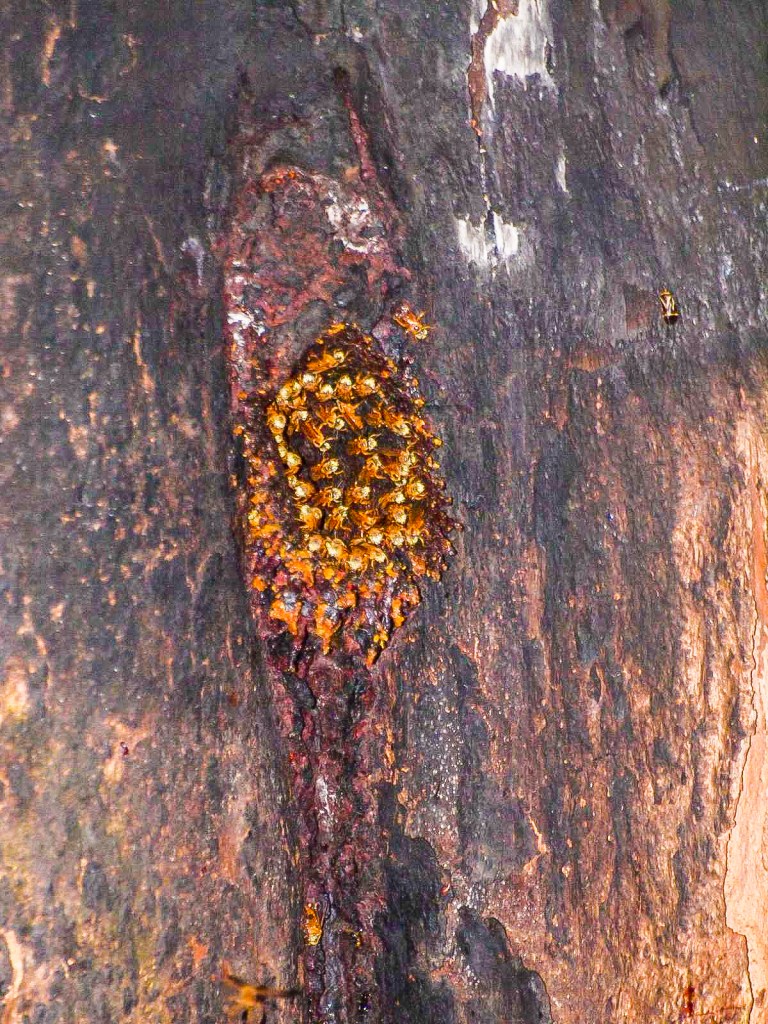
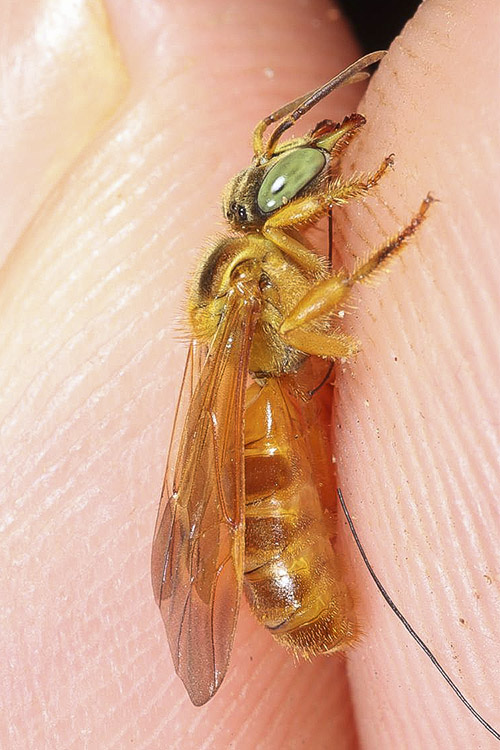
but deep in this Amazonian jungle dwells a species of a little stingless bee, yes without a sting, but with ferocious jaws and a very bad aggro attitude. Go near one of their tree hole nests and you need to run as armies emerge on intruders. Below see the nest, with a full compliment of nasties milling at the entrance with a gnashing of jaws (taken with a telephoto lens from a decent diastance). And next to it the lovely individual orange bee, having to be held to take a pic by my friend Bernhard, Mr Bee.
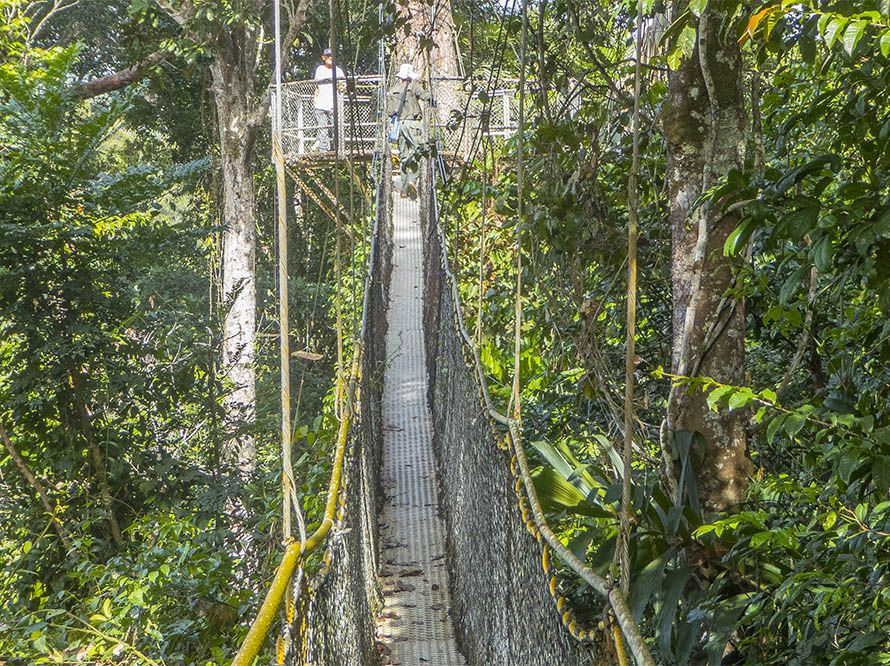
but if you think thats scary, consider that we had to pass by the nest 4 times to get to something far more trembly – a swaying canopy walkway. And having survived the bees, I felt emboldened to actually do the thing !
next I will do a bit bullfighting and lion taming before breakfast.
Day 15-16 ish
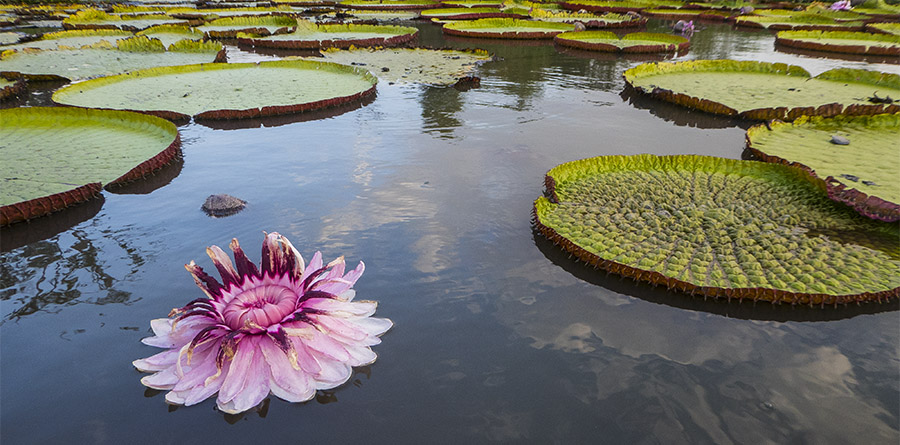
It was time to say bye bye to deepest darkest jungle and head for the open sunny savanna. A large southern part of Guyana is this habitat, with grassland and small trees – unlike the larger artisitic acacia trees of African savanna. And there be a river here with little side lakes slowly drying out and full of the amazing giant amazonian water lily. And water birds in profusion.
Gather round and hear a weird and wonderful tale of nature at its most intricate and precise. It is a circular story, hard to know where in the circle to start, but here goes. We are talking about the pollination of the giant flower of these plants. Below see a 2 day old giant flower, and the lovely leaves beyond
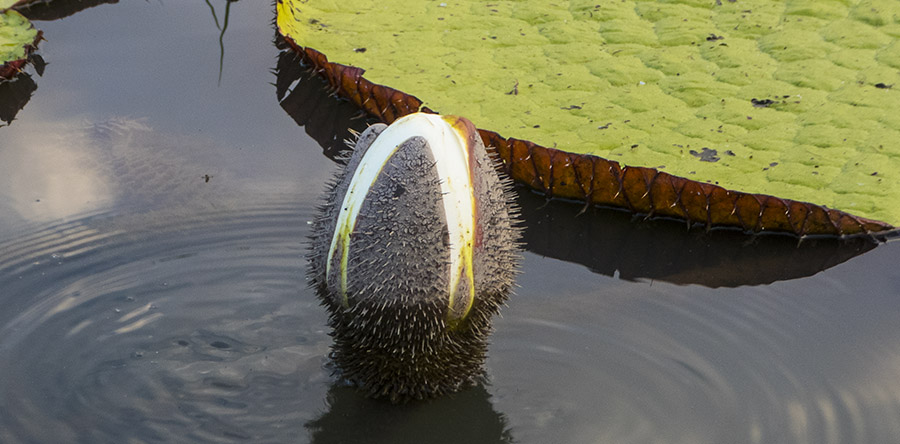
next, two metres away, is a flower bud, that is ready to open. It does this act at sunset and pops open so fast you almost think you hear it popping….
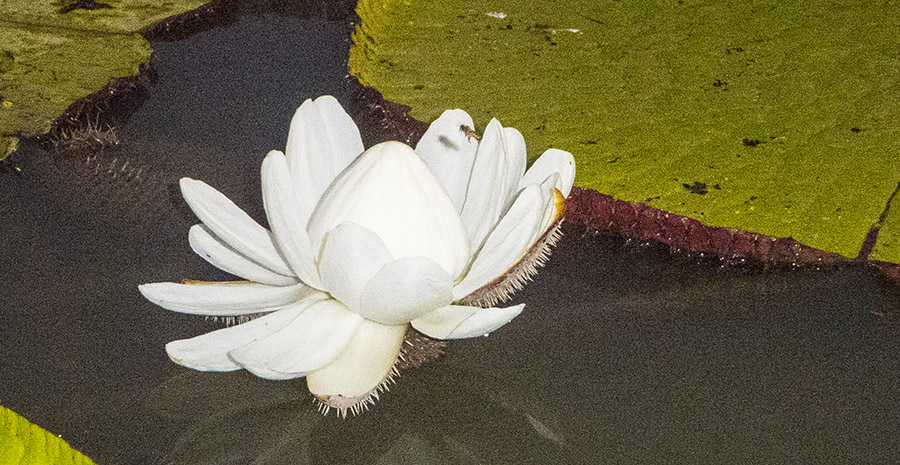
And here is the fun part. Meantime as it is doing this, the nearest old flower is also opening further, perfectly timed in tandem. Inside is a palace full of pollen and nectar, and specialist beetles that have been imprisoned inside for a day or two…. now they fly out (top left)
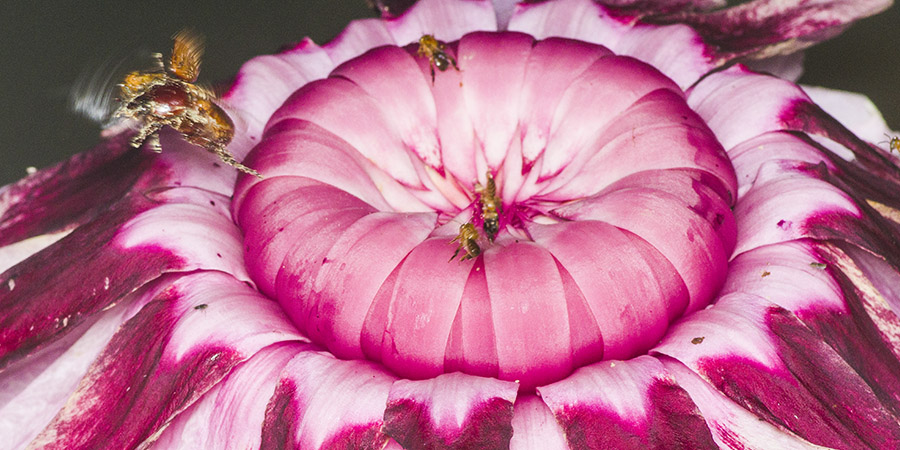
and in seconds fly into the opening white lily, whereupon they are imprisoned for a day or two until emerging covered in pollen and doing the pollination thing again with swiss watch precision.
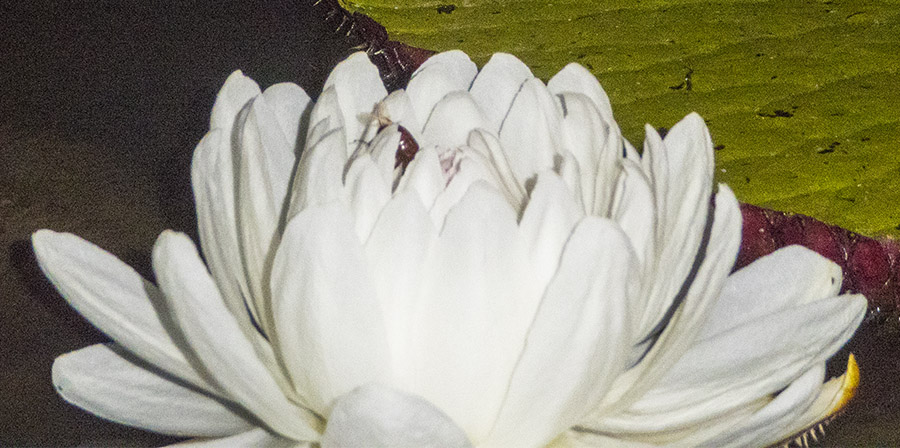
an evening in a canoe on a billabong spent being fully enthralled.
I sometimes forget I had a juicy story ready before in time – back in the very moist rainforest, I found one of those wonders of nature called a slime mould. They are hard to define, as they are made up of single and multi cell bits of all sorts of bacteria and fungal origins, and they often change their form. And unlike true fungi, they can actually move as a whole. The one below on the left was a simple blob of yellow single cells – but the very next day it had decided to form fruiting bodies and undertook this total dramatic transformation in less than a day.
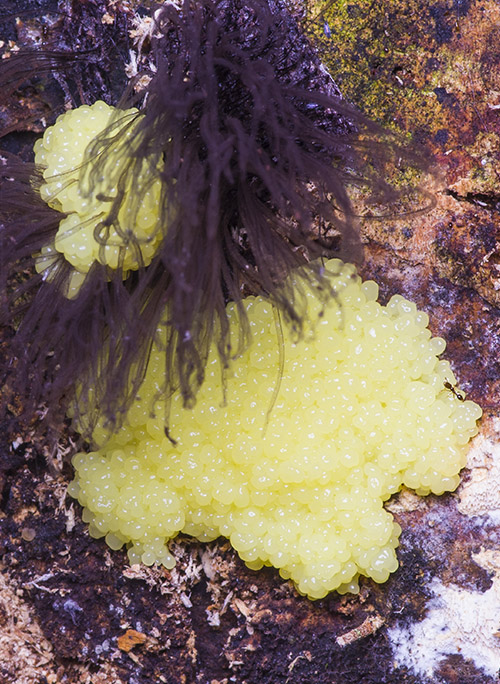
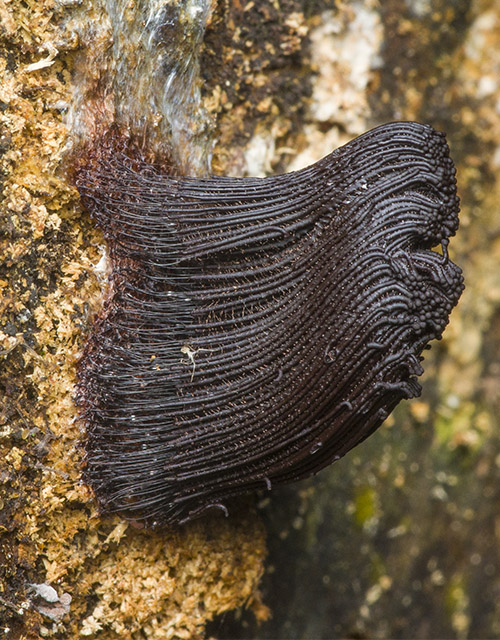
Apparently some humans, in South America eat some slime moulds, but since these eeeckinesses are obviously aliens from another planet, I would be a bit wary.
With insects a bit scarce here in the dry savanna, let me show you what produced more than a little adrenalin today. Some terminal twat lit a grass fire on a hot, dry season day, with strong wind, which just happened to be blowing in the direction of the lodge.
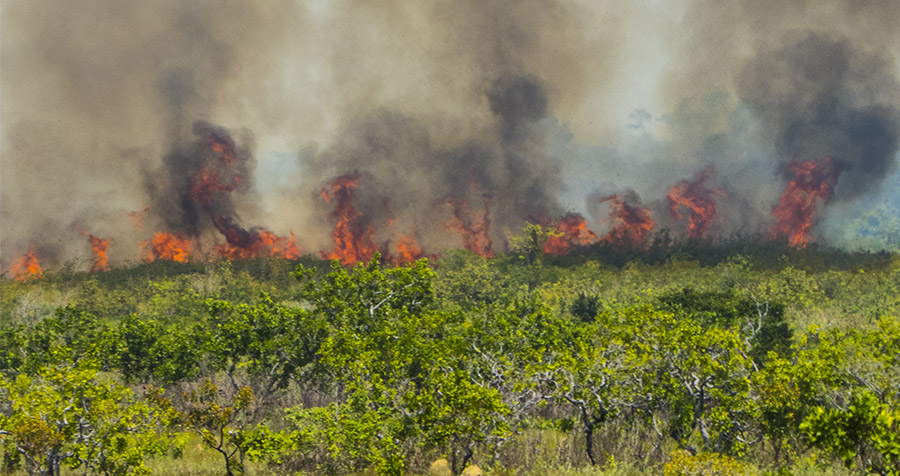
Boss man was pretty cool, backburned a bit from the lodge and we listened to the roar, as some of us heroes packed up the cameras and passport.
And speaking of this savanna, it is very not like the classic savanna of Africa. No antelopes and gnus roam its vastness. In fact no herd animals at all make use of all that grass. Termites are the major grass eaters, and therein lies a tale.
We had an expedition. Up long before sunrise and into the expedition truck, while from another direction, one of the local Amerindian indian cowboys set off on a horse. Both were is search of the largest beast in this landscape, the elusive giant ant eater…
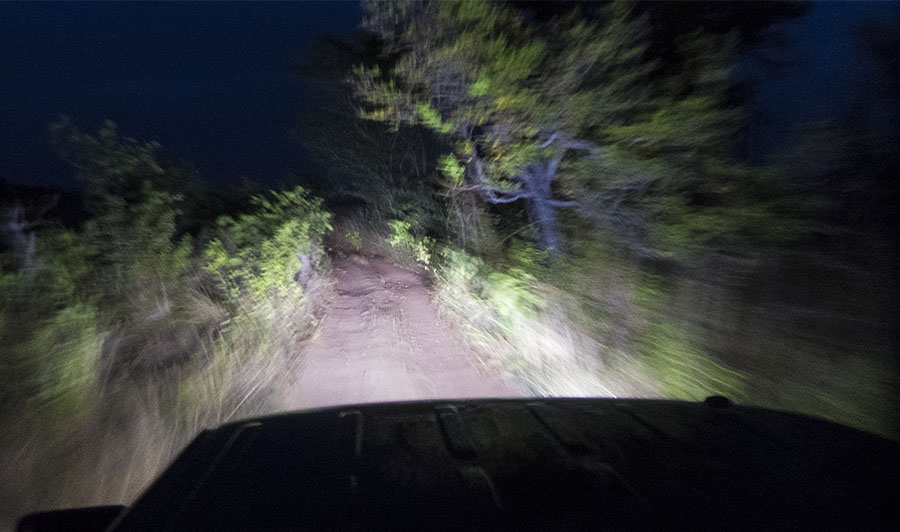
and its a good point to remind you that a book about this area was writted a long time ago, by a clever author who titled it EVERY COWBOY WAS AN INDIAN..
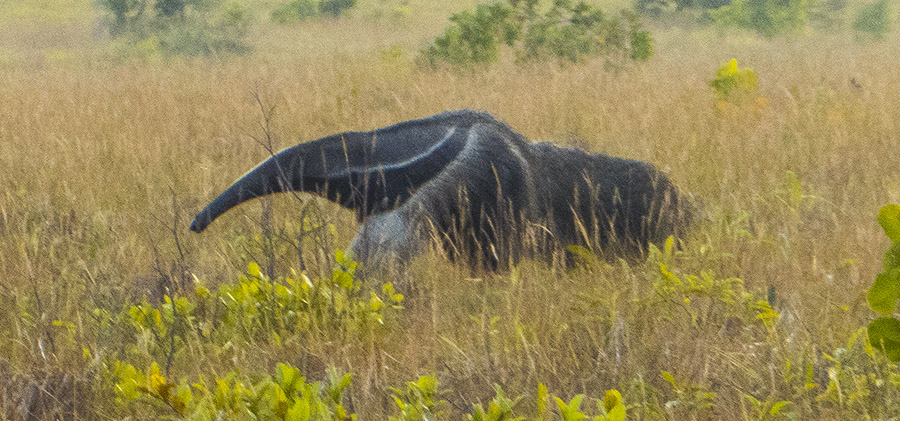
So the clever indian found one – on the second day, and gently coaxed it in the direction of us. It eventually crossed our path and I got an iffy pic – and a great happiness at seeing one of the weirdest mammals on the planet, all 2 metres plus of it
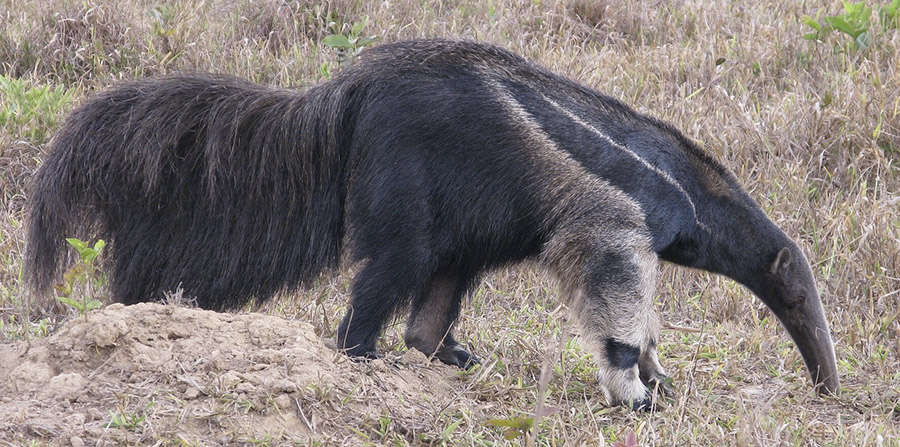
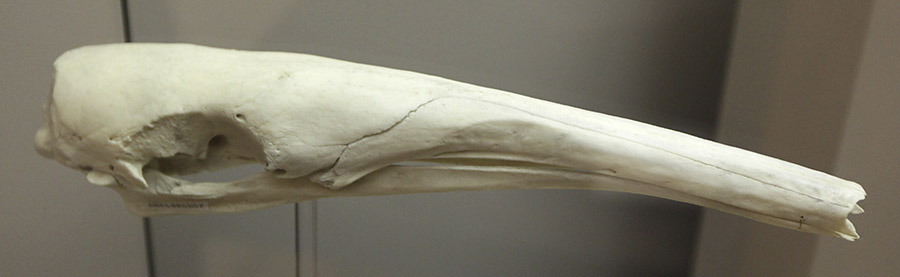
and just to harp on about its self, it of course does not eat ants but termites, doing so at night, with its 60cm long tongue. Below a better pic of its weird tail, and a pic of its weirder skull, both care of nice mr Wiki.
Day almost last
No more insectoids of note, but the mammlas keep on giving. See the giant river otter baby, munching a fishi. Deep in the act, and then at the point it suddenly noticed my person. Its mummy and daddy are about 2 metres long !
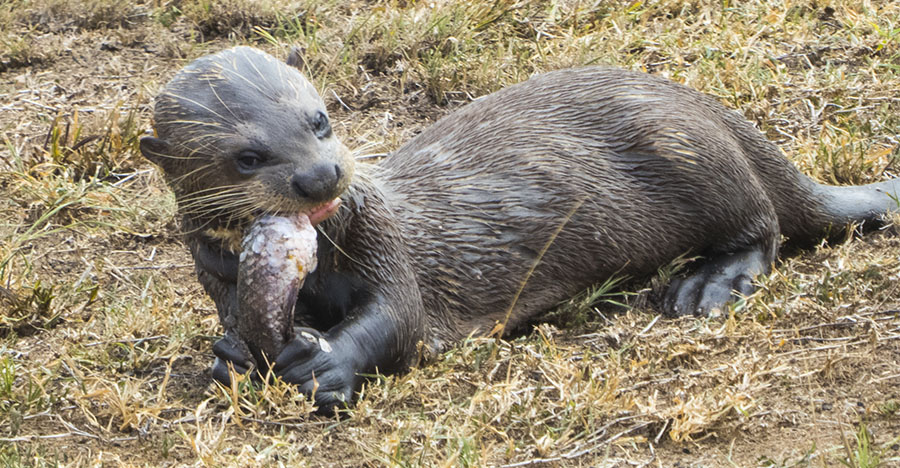
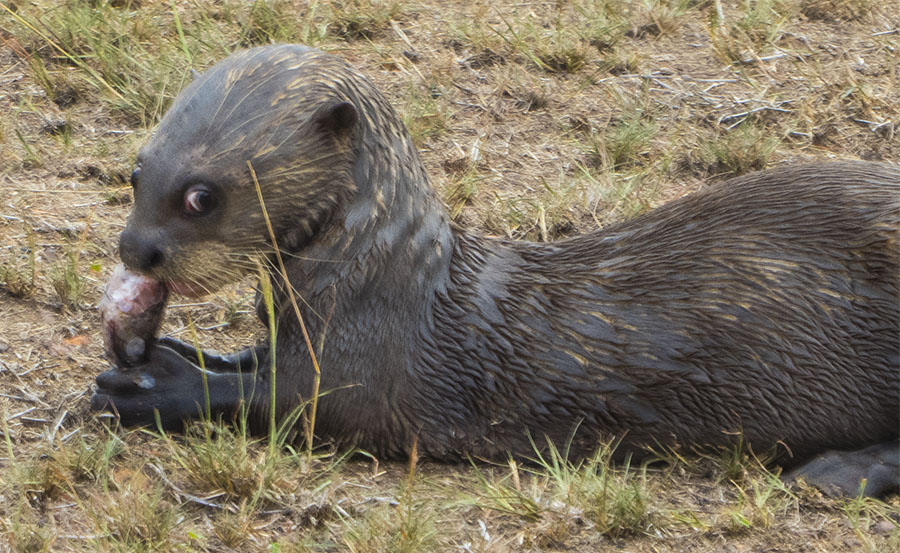
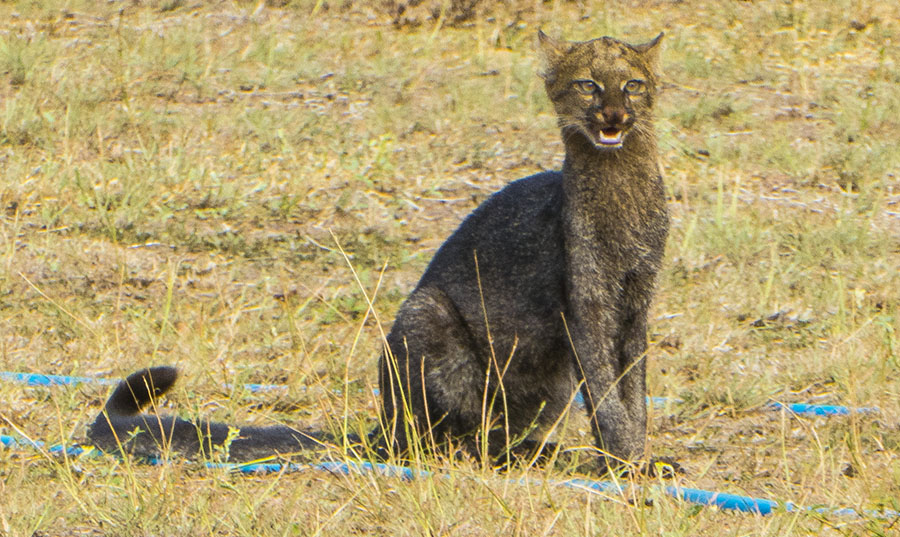
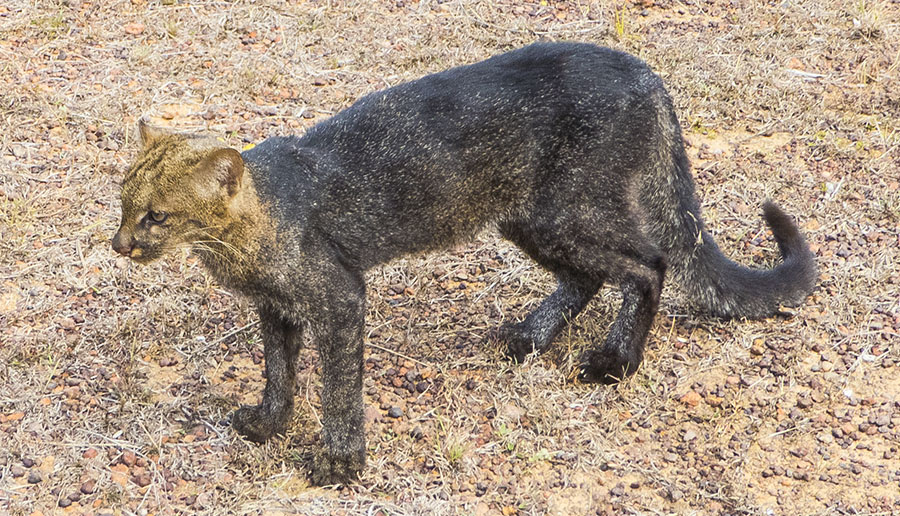
There are two more four legs to include here. One is very dear to my heart, as it is a puddy cat. Most humans who come to South America never get to see a real Jaguarundi, a long lithe very elusive hunter cat. But here is a habituated one whose mummy deserted it, and it has decided to love the humans who run the lodge.
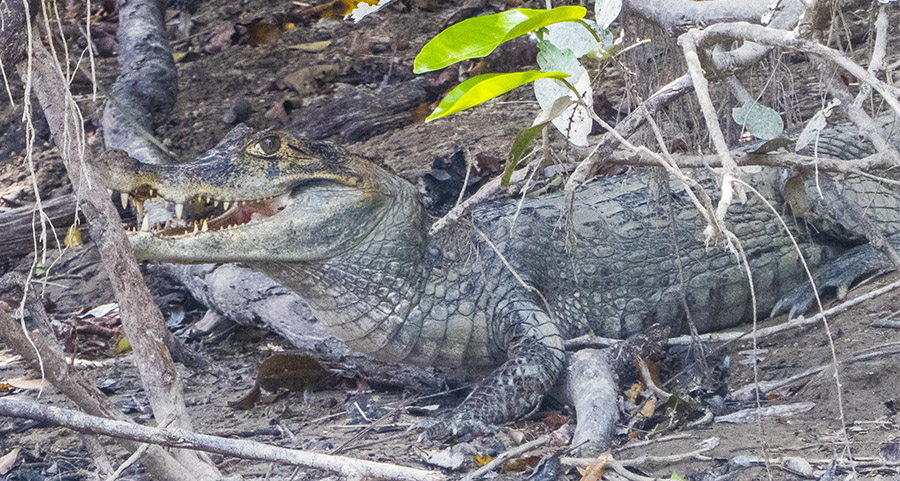
and to say goodnight from the deepest darkest Guyana land, a lazy yawning caiman. They are very common in the local river, some small, some up to 3 metres long, making swimming a no no.
pa – but wait there is something very cute to end it all on. While we were in the first and second lodges in the rainforest-land, we got ferociously attacked by tiny critters that here are calle by the french term – BETE ROUGE (red beasts). In Oz we have chiggers which are microscopic mites that burrow into the skin and really give one the shits. But the local dudes, while related, are the first stage larvae of a tick. Here they are beyond fair play, with bites that instantly get septic and ugly fugly yukky, want to run away screaming type. Ticks have 8 legs of course, but their first babies are born with 6 legs. So as a friend Gabrielle pointed out, here is the great exception to the rule – a six leg that is not good.
 SIX-LEGS-GOOD