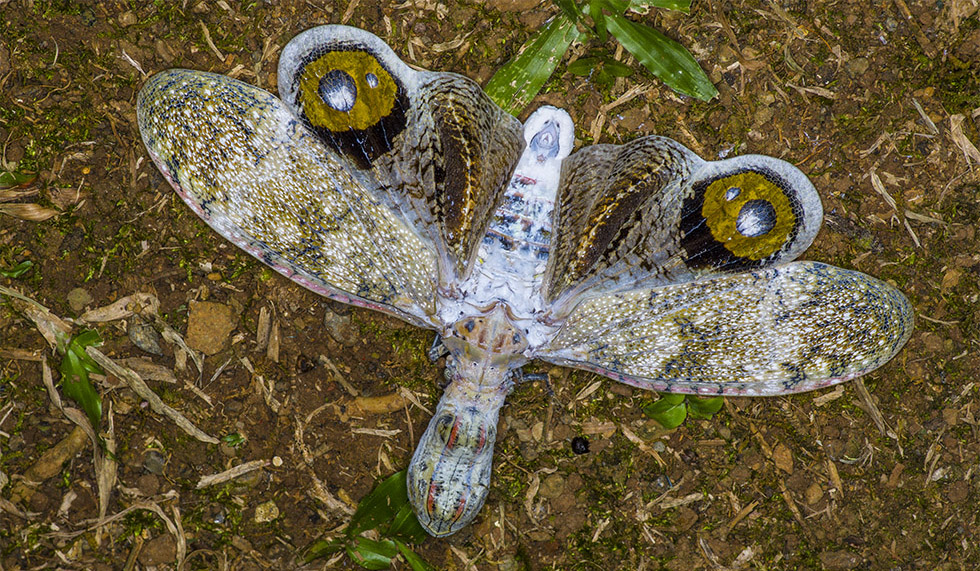
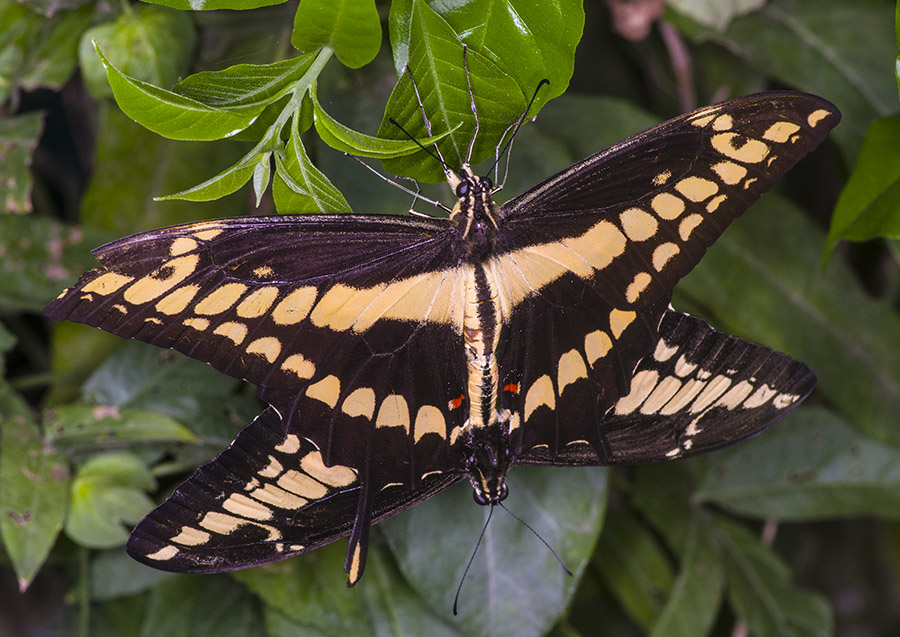
Watch this space – Costa Rica critters will appear from about the 30th April 2024…(the very bizzare insect at the start of my main six-legs-good blog, is from Costa Rica, chased by my camera 24 years ago)
Greetings. Yes after 44 hours in flight/airport time, and long drive from the central mountains to the Carribean lowlands, I is finally in eecky sticky humid rainforest land. Some might find the effort/reward ratio on the odd side. I do.
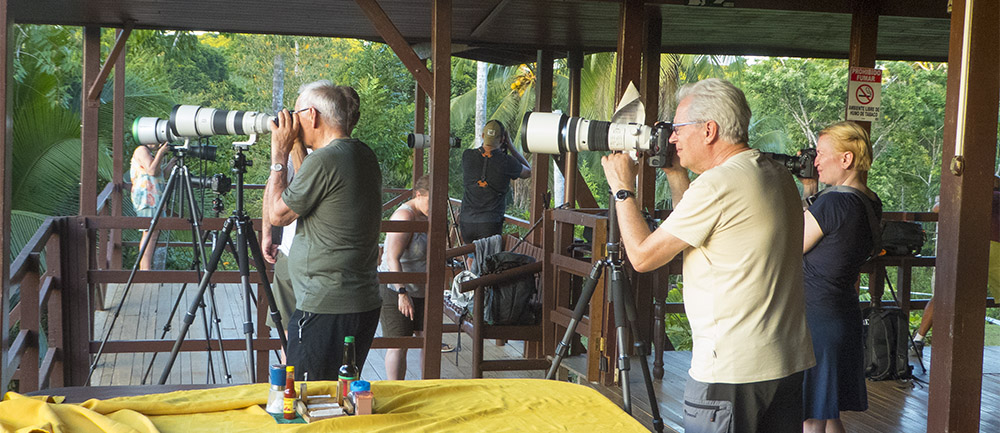
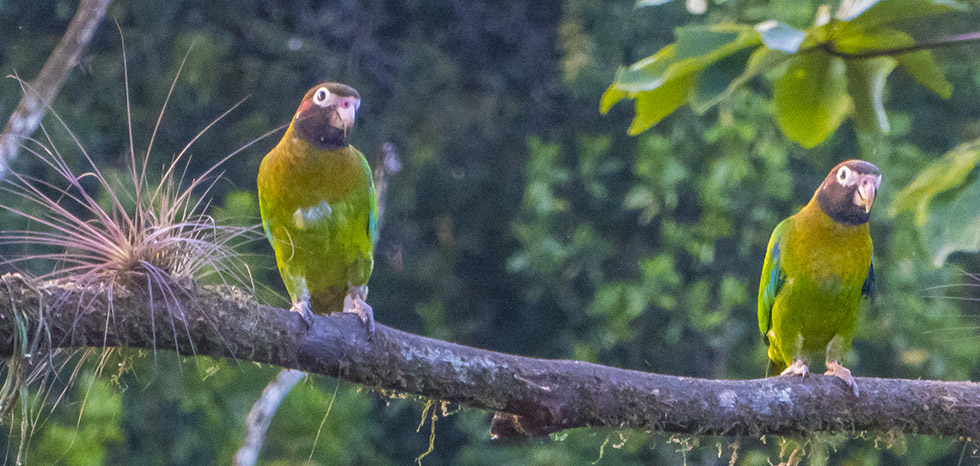
The lodges which populate this green (in every sense) country, mainly cater to birdos, twitchers from the richer countries who spend big to find places like here at Lagardo, deep in the forest, with a restaurant verandah overlooking multiple bird roosting sites. Their patronage shows the locals that the forest is worth much more intact than in ruins. See some of the Germans here today, ooogling the little parrots… now famous on three continents. Why not do it with a cocktail in hand. By the way the little parrots are the original ‘love birds’, they pair for life and are never seen alone. Sweeeet.
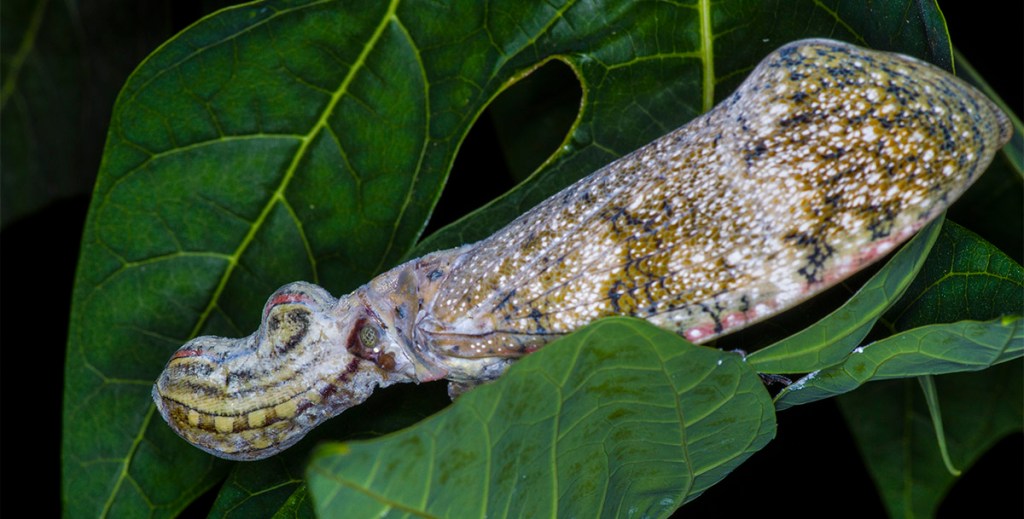
But lets get back to the real game. As almost always I is the only insect botherer here, spending my days in the dark forest, and nights in the darker one. My first day/night is already large in the tea-leaves of my life, as I found one of the insects that has been on my bucket list since I was a wee boy in Poland. The happily bizzare Fulgoria laternaria. It has many common names – ‘the lantern bug’, the ‘peanut-headed bug’ exist both bacause it was wrongly thought to have a light in the big ‘nose’ and because the big nose is a bit peanut like. This nose is worthy of much debate. It is empty inside, fully there for effect, which the second picture shows well. Suddenly the peanut is not such afterall, but a large predatory creature, with cute square teeth and large eye. Potential predator of bug, beware..
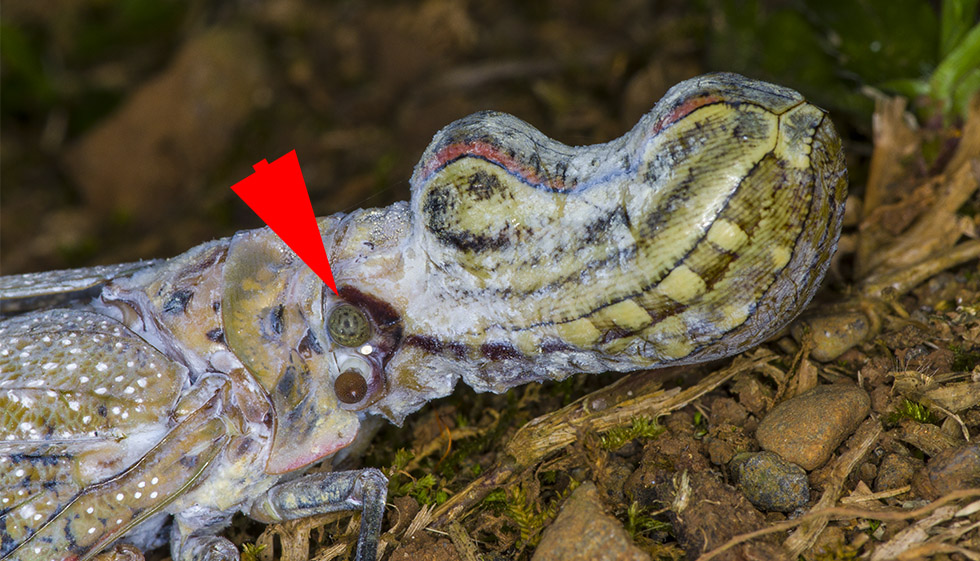
The arrow shows its real eye, and actually where the real head ends. And did I mention it is very large, fully 90mm long, and can fly. Its rear wings, hidden during rest, can be suddenly burst open to reveal a secondary defense in case the poor paenut is not scary enough. Two large eyes staring at you full on.
oh and when the kids have gone to bed, go to WIKI and type in Fulgoria laternaria. Read about the folk theory of what to do when you get bitten by one….always travel with a friend to be sure.
Another day in the forest. The wet season is late so insect diversity is down – on the other hand the trails are not mud baths and the humidity not yet terminal. One of the cuties from the trail is the famous bullet ant. It is considered the most painful biting insect on the planet. Not only amazing at the start, but the pain spreads through the lymph nodes and gives you bull-ant-plus pain in many parts of the body for a full day. Multiple stings can kill by shock alone. The name is from people who have been shot and comapared the pain.


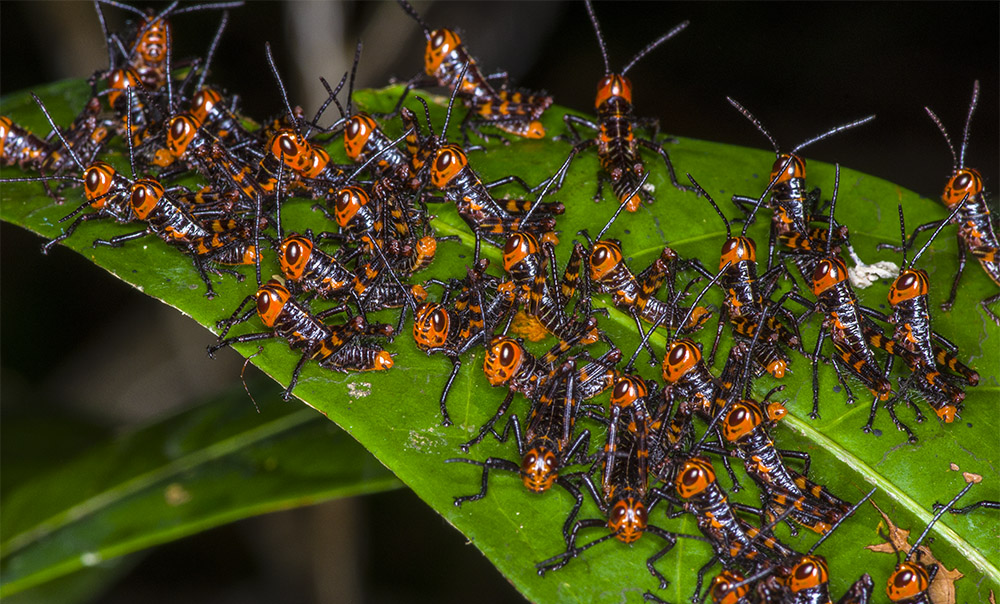
Meanwhile in another part of the forest, a LOT of baby grasshoppers decided it was stampede time…

Very few flowers here, but a look at them found the usual suspects. Sweat bees, the ‘stingless bees’ we have a few species of in Oz, are very speciated here, very common, and a major pollinator for these habitats. Here an orange one hovering next to a flower that is not yet open – on expeditions I start hunting before sunrise. And a large black species mobbing an open one.


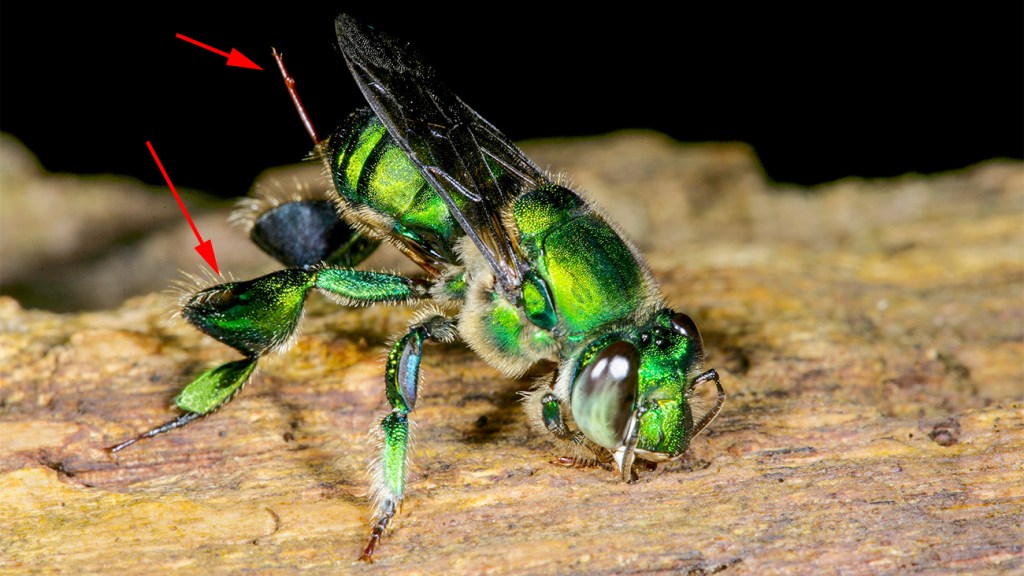
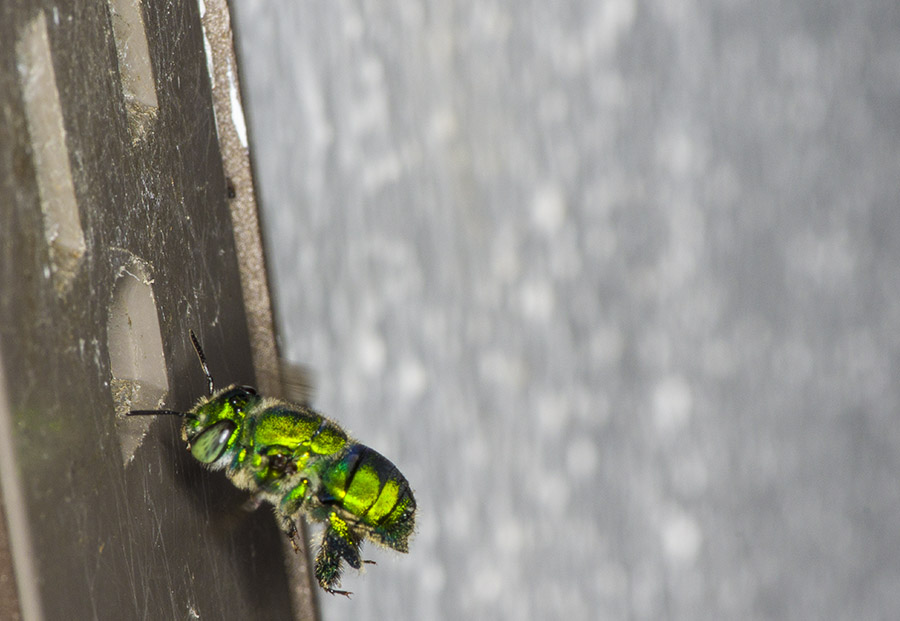
and speaking of bees, the most amazing of them all are the orchid bees. They are gorgeous all over, and have great original habits. The males spend their days searching for new smells, and if favourable, they capture some of it and deposit it into a special pouch in the rear legs. These are mixed into original perfumes and taken to the females in the canopy, to see if the perfume is good enough for a reward of a bit of nooki. See picture taken on last expedition here many moons ago. Arrows show the pouch, and the thing that looks like a sting, but is actually the end of their very very long feeding tube, used to pollinate deep throated orchids.
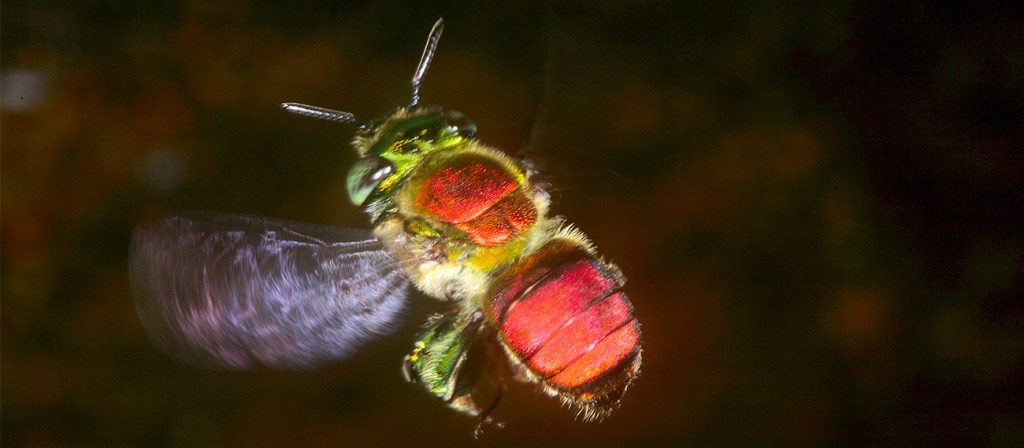
Now the reason orchid bees are mentioned here, apart from being effing amazing, is that yesterday I saw something even my super expert bee friend in Germany, has never seen. A FEMALE, down form the canopy, collecting sticky resins with which she will build a nest under a leaf. She does not have the fancy pouch on the rear legs, and just loads the resin onto them sloppily, like other lesser species of bees – note the glob she is carrying.

HOLD PRESS – while talking to my bee fanatic in Germany via the magic of whatsapp, getting ID on the bees I have seen to date, amazingly, another, female, tiny, orchid bee came into my purview, hovering happily at a powerpoint to see if it could nest therein. I was able to get camera in time to capture the little cuti.
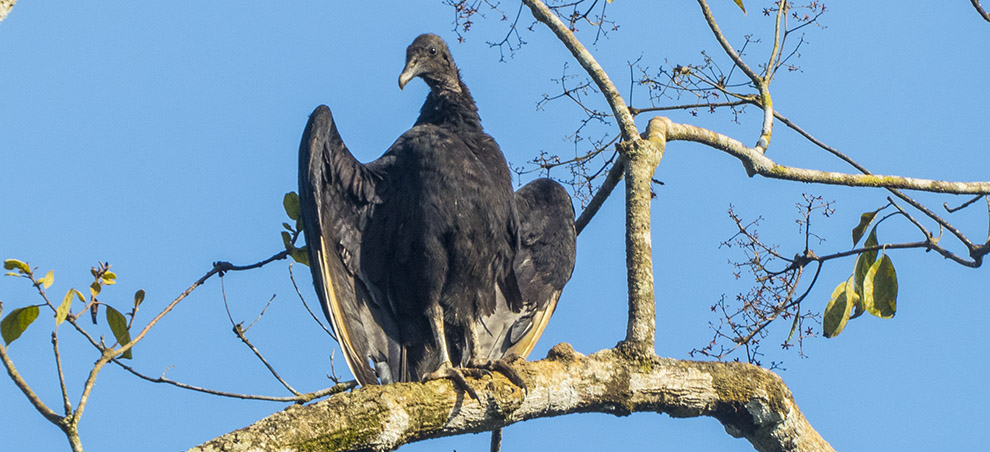
SUNRISE, in the misty forest. While the afficiandos are focusing their giant lenses on the banana bird feeder off the verandah, I have investigated something different. Note the artisitic tree in early light. Note the closer view with odd little shapes about, and then see what they is – lovely cutipie voltures.


And speaking of birdies, of which there is a lot here, this morning over the first cuppa at sunrise I spied a toucan, artistically halding a fruit-loop like a toucan should.


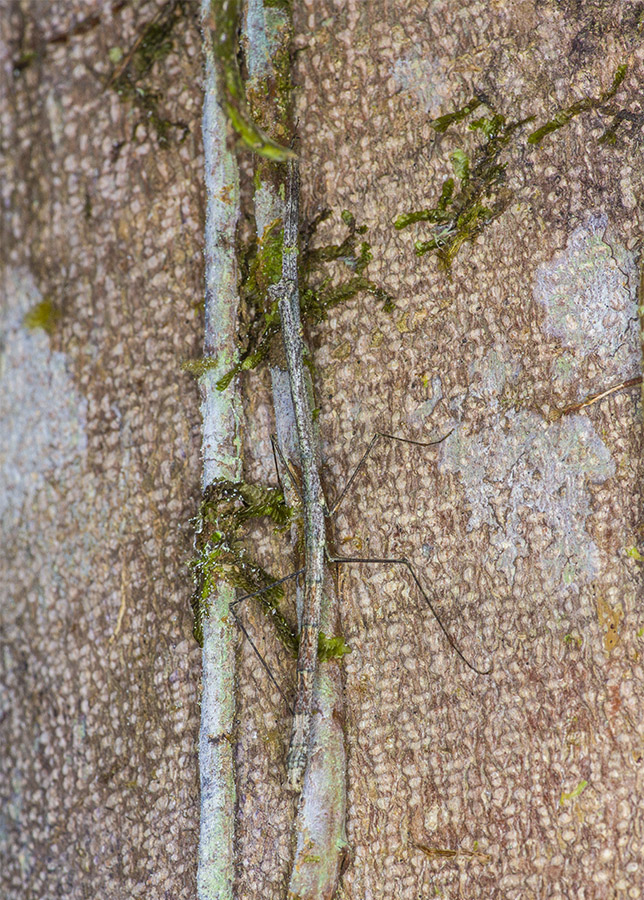
Another day. When I was younger than this, in 1991, I got camouflage-struck on a trip to Borneo, and wrote my first book called ANIMALS IN DISGUISE

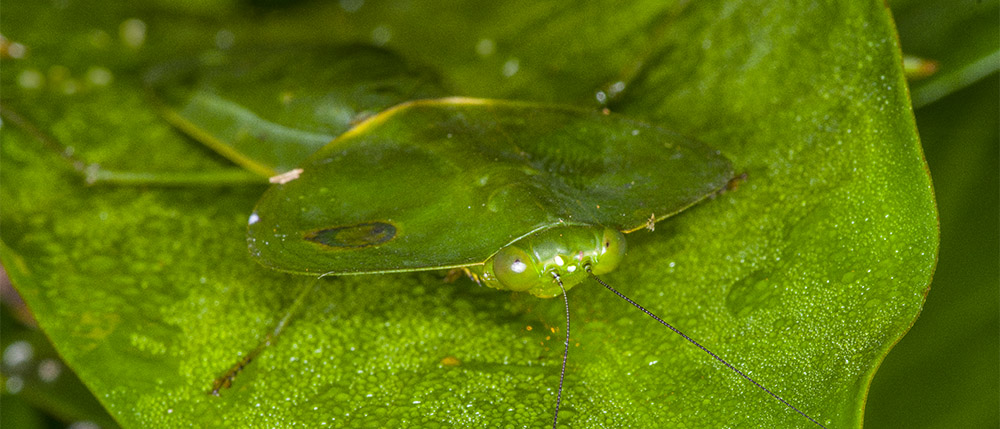
Many of the players in this story were crickets and grasshoppers that live in the messy leaf litter of rainforests by day, and come out to feed at night, looking like flotsam from the forest floor gone loose. So it was sweet to go back to those roots with the katydid discovered thus…

and an honorable mention for this stick mantis below
CONFESSION TIME – one human reader has already noticed a little joke, the devil on my left shoulder made me do it. The cute toucan, genuinely, artistically holding a yellow fruit in its beak, has been slightly altered a day later, to better pay homage to our childhood dream of fruit loops for breakfast. The management aoplogises for such an outrage and promises the original image and a new toucan one, will replece it.
NOW to other matters. Outside my room lives a little baby basilisk. Yes the fabled Jesus Christ Lizard, what walks – or rather runs very fast – across water. They live near water and if startled start running so fast that they do not sink. Just like the little speedy son of Mr Incredible in Pixar film. As long as they can better 4.5m per second they wont sink, but usually by 4 or 5 seconds later, that much energy fails and they swim the rest of the way. About 30 years ago, on my first time to this land, I witnessed this happening several times, and amazing image still fesh in memory. So below a pic of my baby one, and a pic from a serious book, showing the actual act.


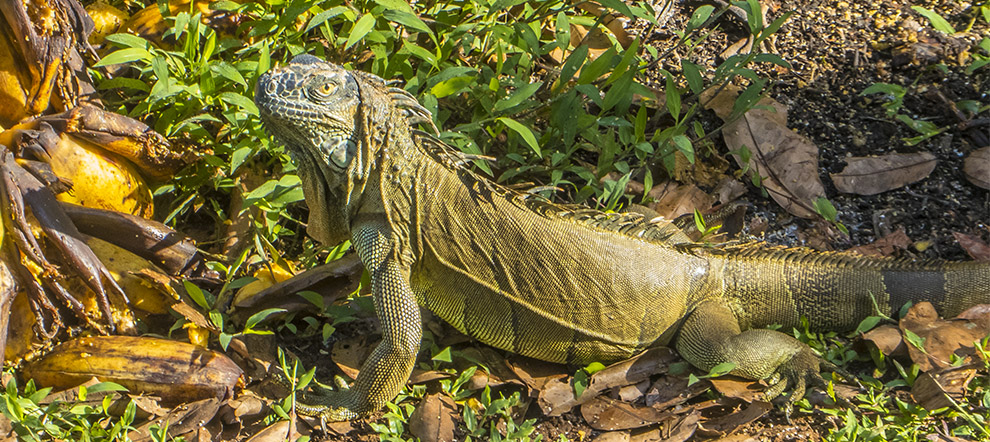
and speaking of lizzies. Look at the grumpy face on this iguana. You would not know that it is not dangerous to anything, only attacking fruit for a living.
and it was a bad day to be a cricket in the forest today. This naughty wasp is carrying it away to bury, paralysed, along with eggs of its offspring, that will eat this fresh fodder alive – eeeeep.

and another good day in the forest for mr mantis, especially this hooded species, hidden under itself…
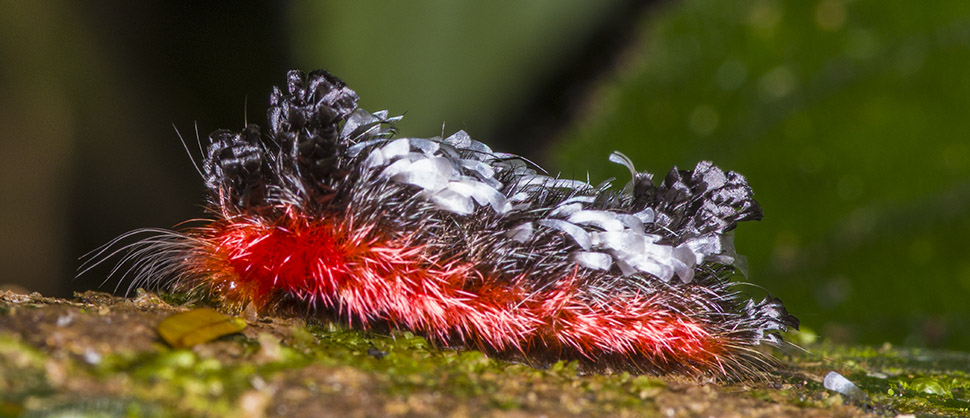
and this cute caterpillar which couldnt decide between being hairy, scaled or feathered, so what the hell, go for all and be a layercake.
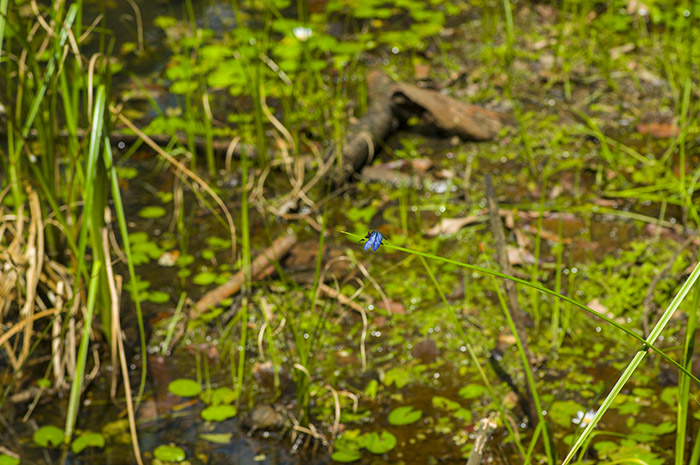
Yet another day. This one spent by the lagoon, no rushing about, no fuss, just observing the amazing basilisks running on water – didnt know they did it so often just for fun – and seeing the blue dragonflies dancing out of range of my camera. But wait, what about the power of pixels. If you have heaps you can throw a lot away before the world ends. See the original, closest I could get to blue beauty picture, and what could be salvaged of its blue and black mood.


OK its time for uber-cuteness. There are two pygmy owls nesting in this area, and one sometimes comes out and poses. It may be small – only about 15cm high – but it does not lack in attitude. Note something odd about the difference in the pics below….?

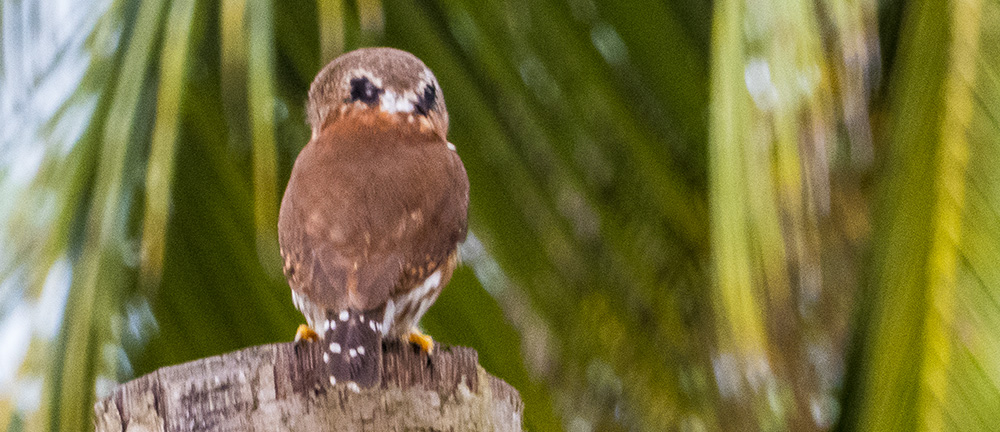
Aint no one gonna sneak up on this clever dude.
By now the lack of insects due to the late wet season seems to have transformed me into a twitcher. I lack the long lenses, and feel a mite silly with my small dick pocket travel camera, among the behemoths around me. Lets get this in proper perspective. The previous Germans – seen here in another pose:

… with their uber lenses on Canon and Nikon cameras, had the biggest and best, each costing more than my sports car. The Germans who are here now, have the most compact serious bird equipment in the world now, about 50% smaller than the other mob, made by mr Olympus, and costing a mere $12000 just for the glass. My insect camera cannot be used for birding so I use my pocket camera for all the birdi pics here. Below is the real micro-dick shame of your intrepid explorer:

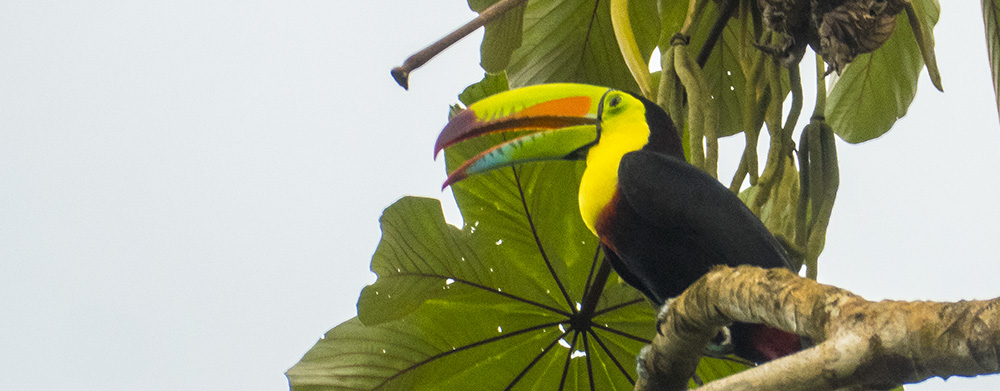
But there is something to be said for chasing stuff that is always there to be chased. See pic below. The early German photo group, came for several holy grail species, one of them being the big gaudy keel billed toucan, which alas they did not see. Here on my last day it has come to say hello and put the little toucan Sam species in the shade.
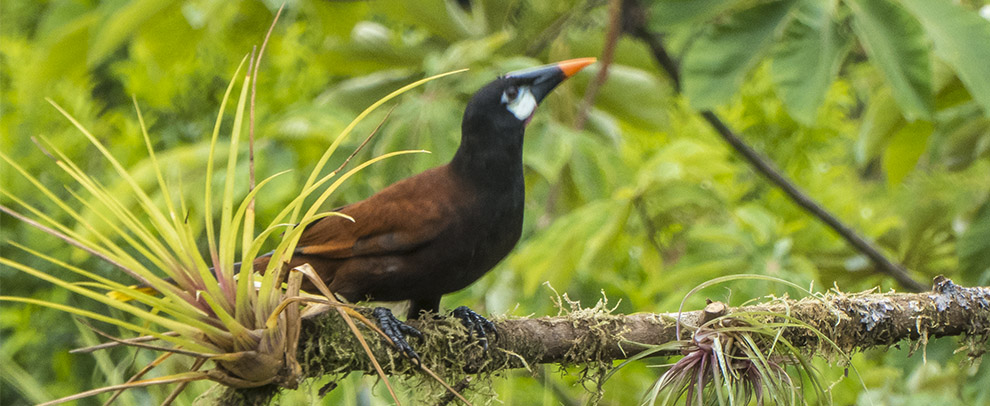
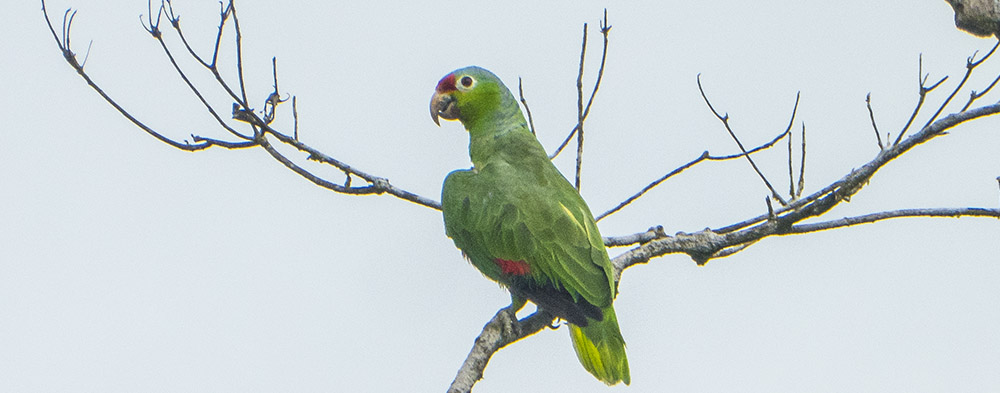
and before I leave tomorrow for the highlands, a last two lowland birdies, the wonderfully named ‘oropendula’ and an Amazon parrot.
And now for Monteverde
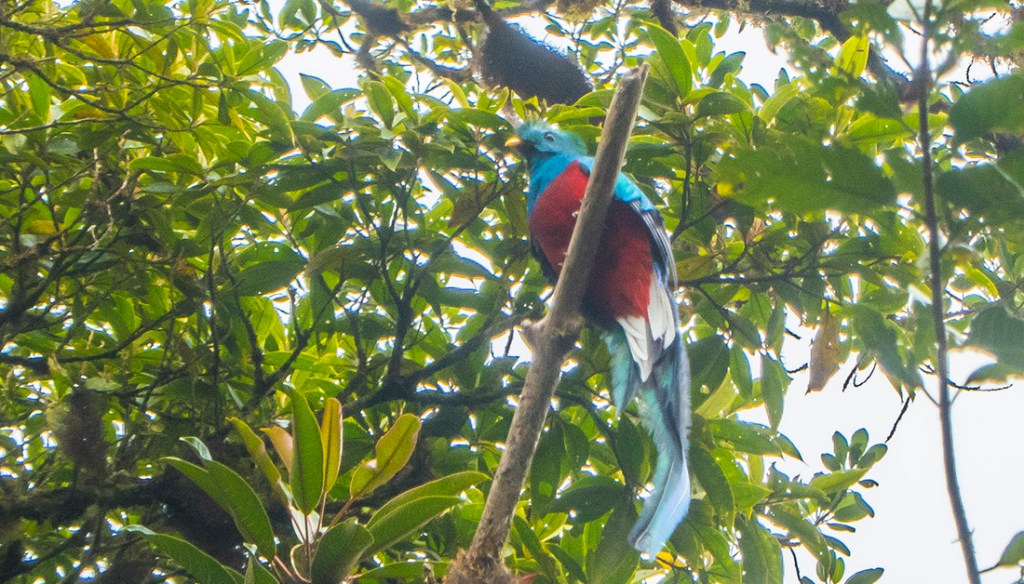
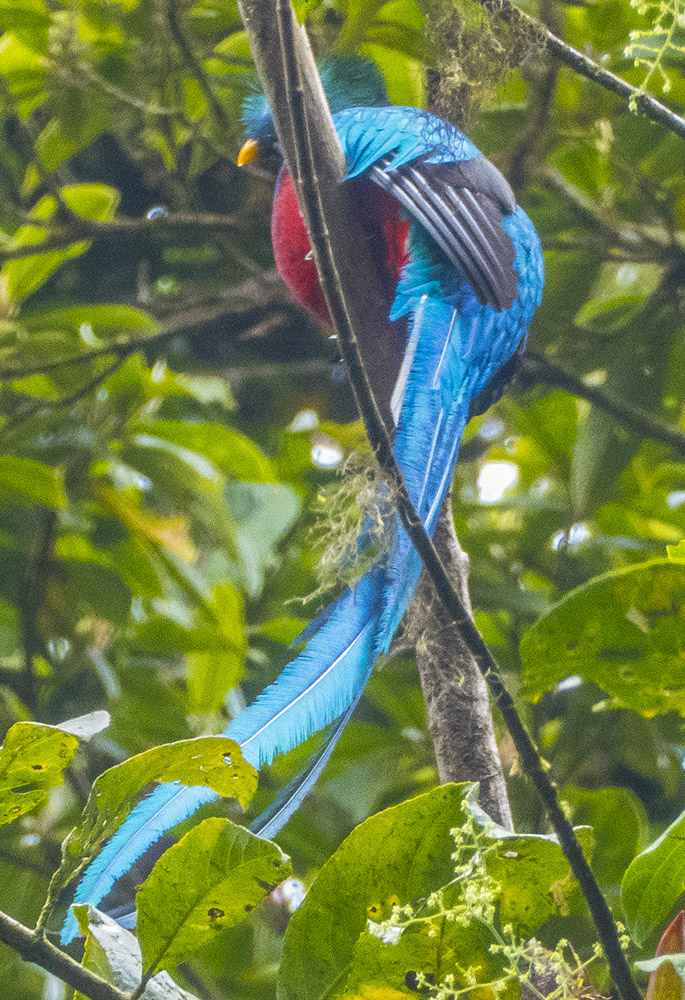
So a complete change has come. Yesterday, May 10, I arrived at the mountain area known as Monteverde, at 1500m altitude. Here it be cloud forest, and every late arvo/evening, there be a shower of rain to refresh the critters. On my first day I started to count the insect species seen. At the poor dry Lagarto lodge I was down to 5 new ones per full day of looking. Here in the verdantness, I was up to 40 by lunchtime, and the camera was busy. Both the insect camera and the silly pocket camera now dubbed the bird camera. The national bird of Costa Rica is the ridiculously pretty quetzal, and it is only rarely seen, and only in the cloud forests. Today I saw it twice and felt quite blessed. The pics do not do its justice, but here it be…
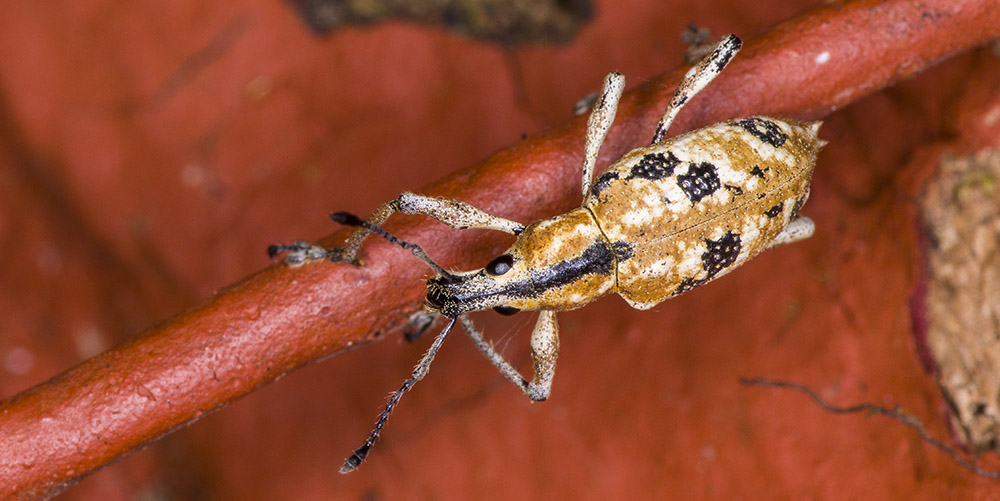
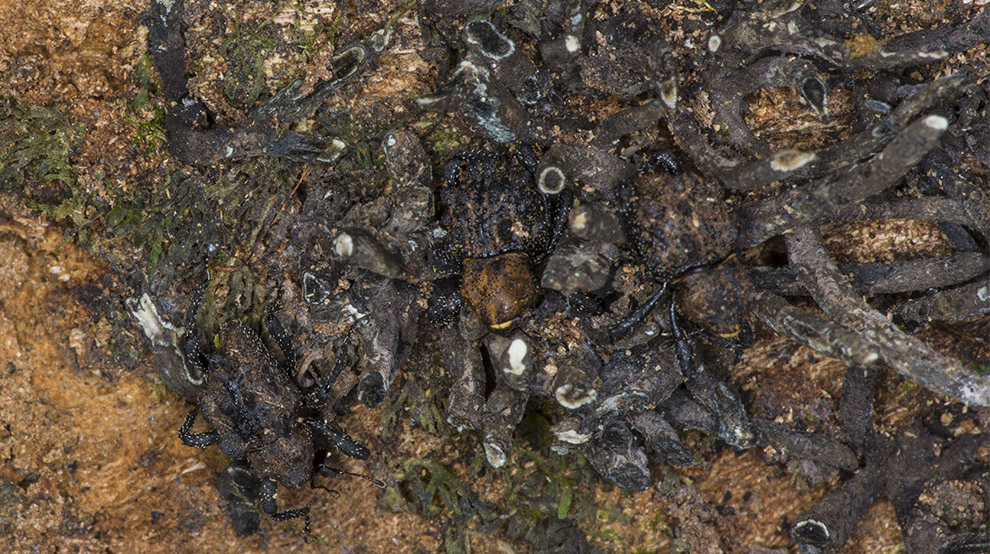
It was also time to see weevils again, the most species diverse group on the planet, and what my beloved has a soft spot for. Below two fun species, and then a game – there be 3 weevils munching on old fungus in the final pic, do your worst looking for them.

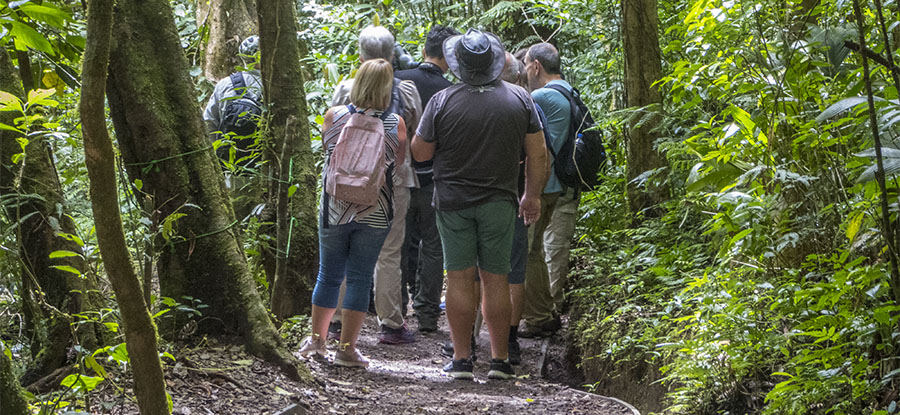
But its not all beer and skittles (whatever they are), here in the very very very popular area of Monteverde. Cue the music from JAWS, as I tell you about the marauding mobs of tourists with their guides, shuffling their way along and across the trails, bulldozing all life before them. My first fabulous, not yet clicked, insect of yetserday, was thusly squished out of reality, and on its way to Panama by the time one such monster passed, leaving me a tad sad.
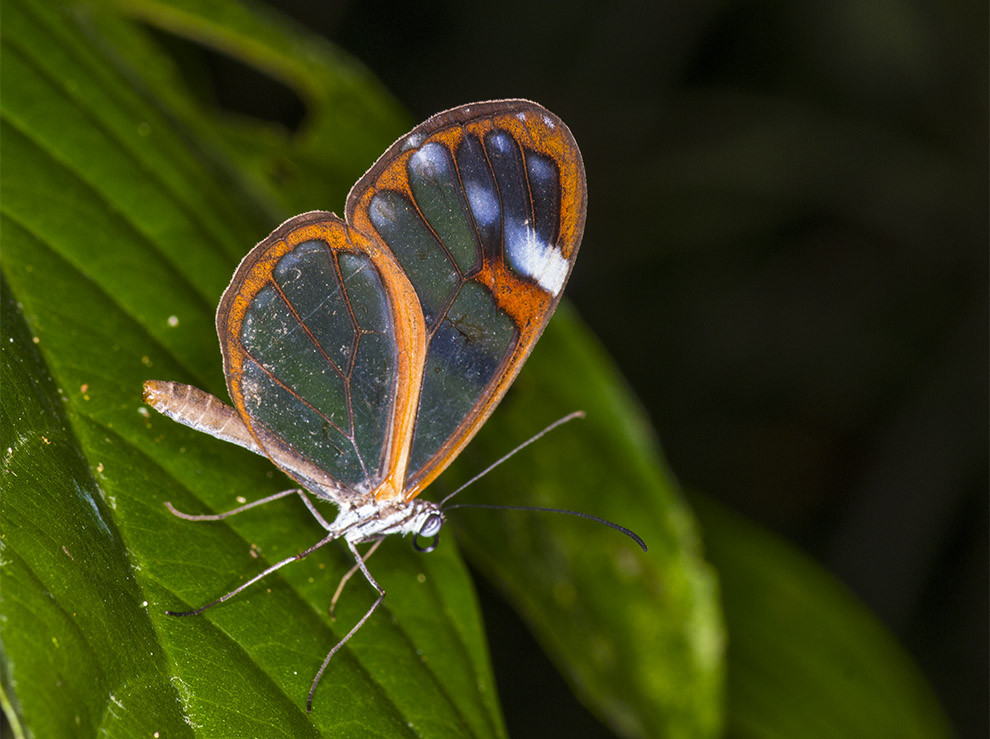
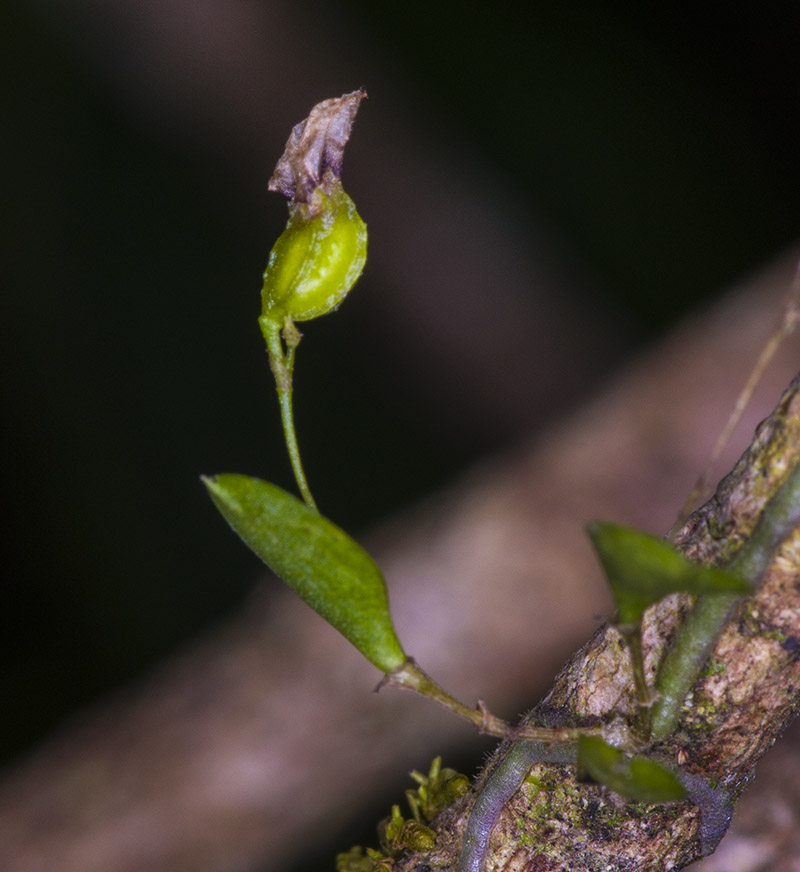
But back to good news stories. After a while I was able to distance myself from most of these and kept finding fun stuff. Below a glasswing butterfly, just as the name says. And next to it is the opposite of the bulldozer story, a micro micro object that survived their passing, the second smallest orchid species in the world, about <2mm in size.
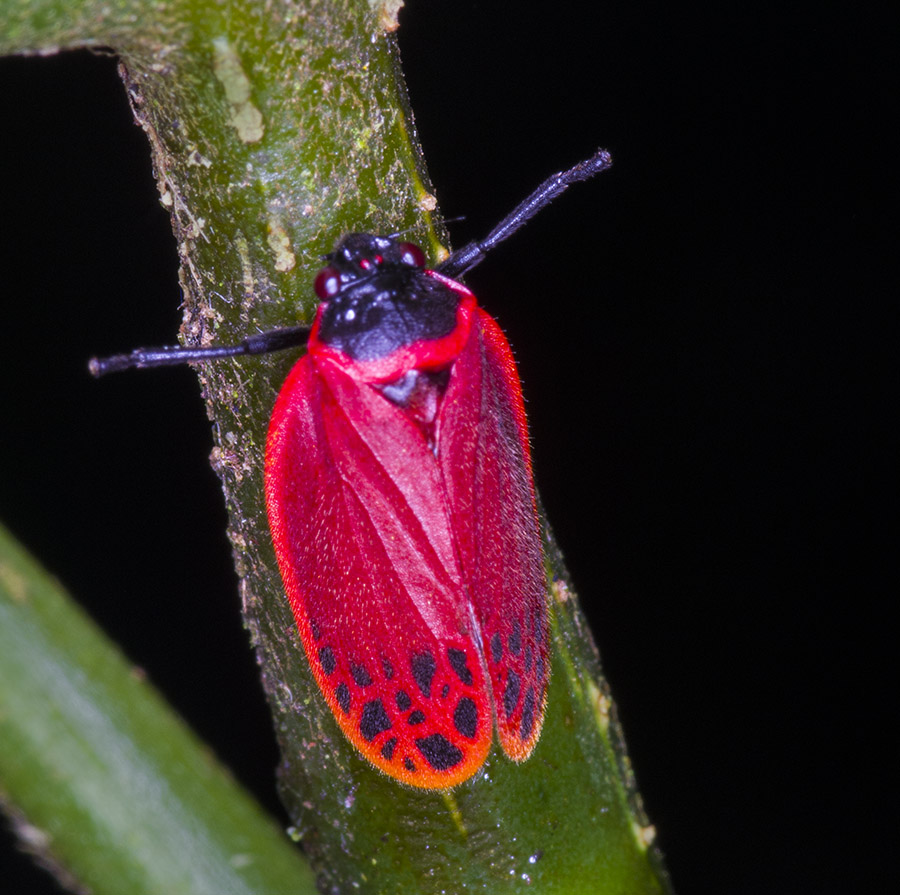
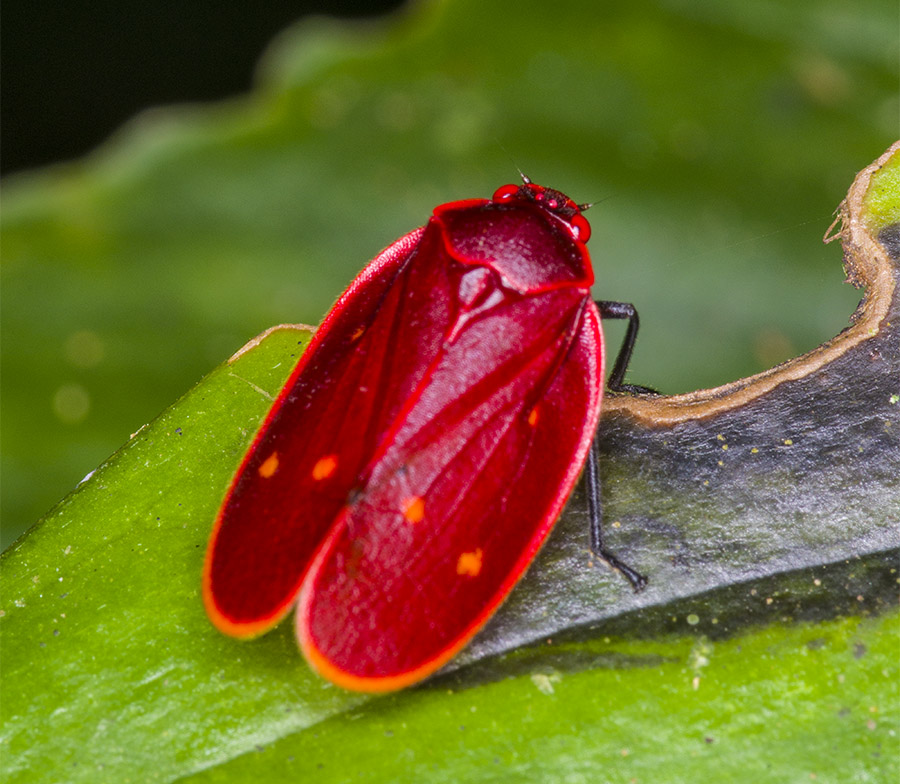
Day 3 in the deep dark green of the cloud forest. The canopy is almost closed, and the clouds race through here, so light is dim, and all seems just a shade of green. But if for some reason you want to be seen, then the wardrobe of choice is red.


Today was severial up and severial down trail walking as I followed along the very knife edge of the central mountain range of Costa Rica, the so called continental divide. At 1700m two trails met on the thin ridge, only about 10m wide. On either side, forest receding through dense fast uplifting clouds. If I had a wee wee on one side, it would end up in the Pacific, and the other side, the Atlantic. But note also that the veg was actually different on the two slopes, as here most weather comes from only one side, the Atlantic (second image).


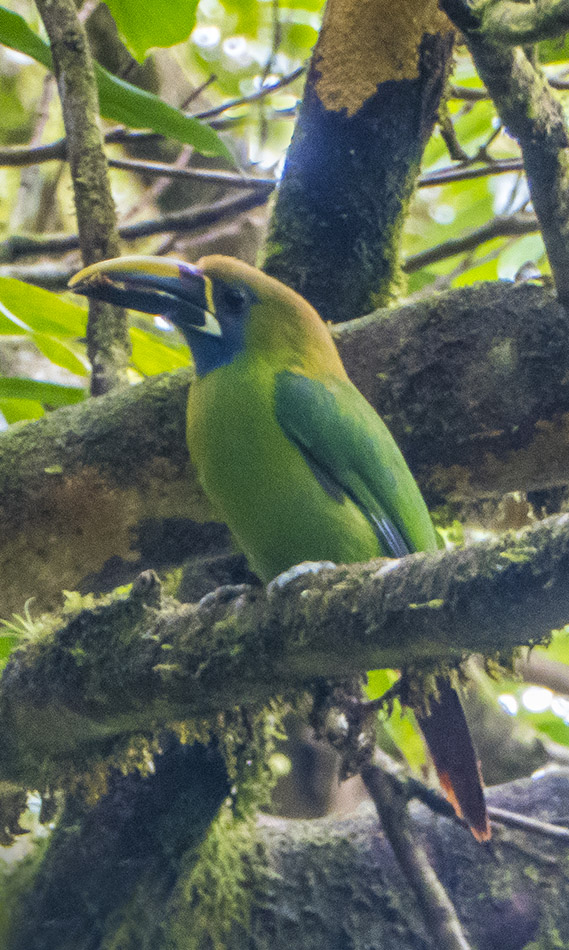
… oh and even though this is now insect land, a part of my busy little brain is still doing the twitcher thing. I could join a fraternity the way things is going, as today I espied number 3 species of Toucan, where only 4 species exist, and found its nest where both maa and paa were feeding babies. Shit photos in the very dark forest, but here is the emerlad toucan, returning with food, and leaving the tree hole nest.

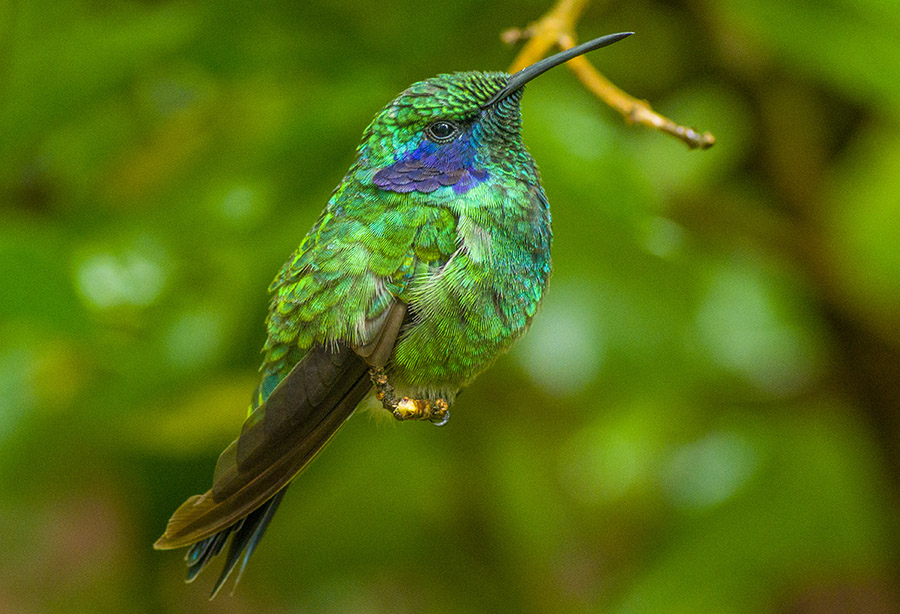
And while we are on vertebrate friends, and my application to the twitcherdom kingdom, the highlands would not be the highland without myriad humming dudes. The first shot is the very cute blue judge’s wig hairdo dude, taken with baby camera. I then decided, as time was limitless for me here, to see if the insect SLR camera, without telephoto, could capture them with some patience. Next two shots is the serious difference in quality thus aquired, especilly the third pin sharp shot. And even that camera is a poor cousin, now, to the ones the Germans were using, or the better phone cameras of today.


… and then it rained. And then it was night and time for my night walk in another forest, with a serious guide to the larger creatures therein. The highlight was a mammal I did not even know existed, a tree prehensile-tailed porcupine, asleep in the canopy. Go to Wiki and type in prehensile tailed porcupine…
Katydids, a very diverse group in the tropics, generally only come out to play at night… you can guess the critter below hides well in the day, among the leaf litter.

and the giant tarantula the guide knows well, refused to come out and play, but showed off its sexy hairy legs
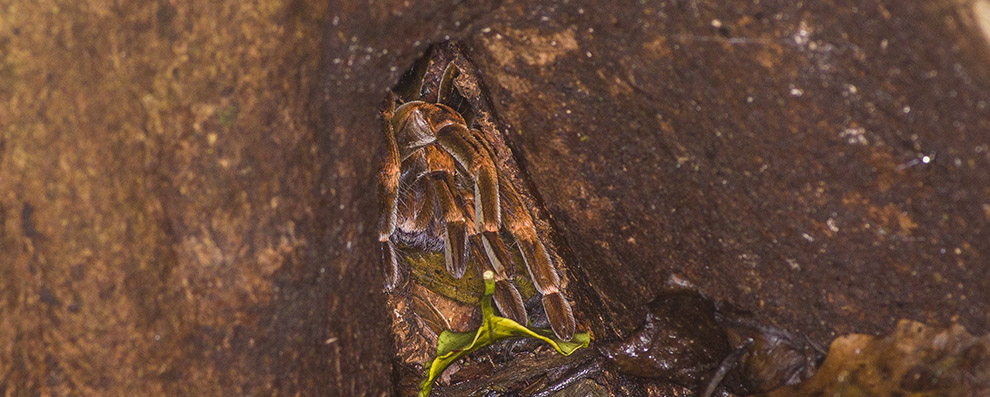
Next day, after next night, and what a difference perseverence makes – see mr spider out, being all friendly like. It is actually the same species as used in the early James Bond movie. Slow and cute.

But well may you ask – what about all the frilly flutterbies the tropics is famous for. I have saved up a few piccies, which will be a double show, as tomorrow there will be no electricity here, and so no new show. I wont try to name them here, as my friend John, the butterfly whisperer, will name them for me.
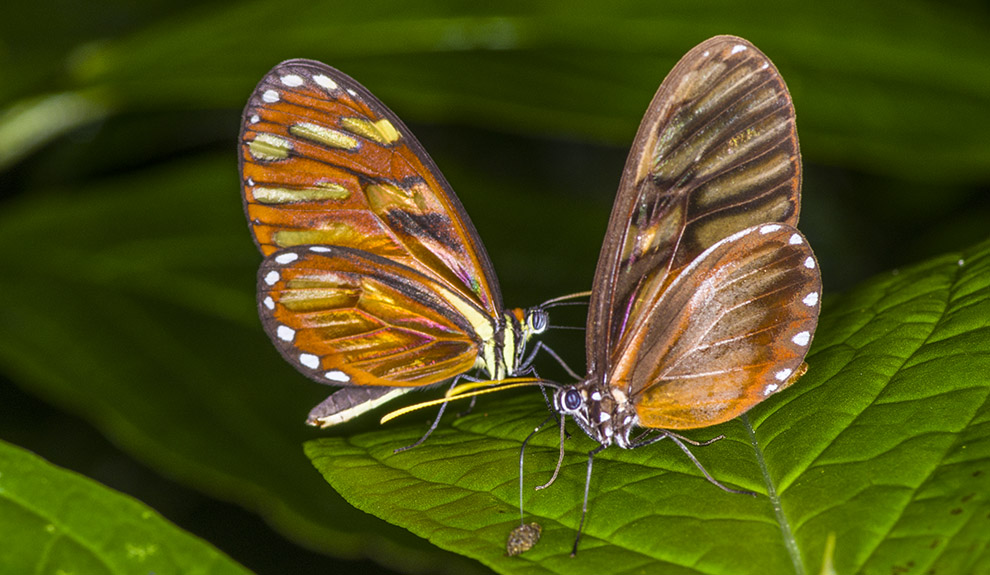
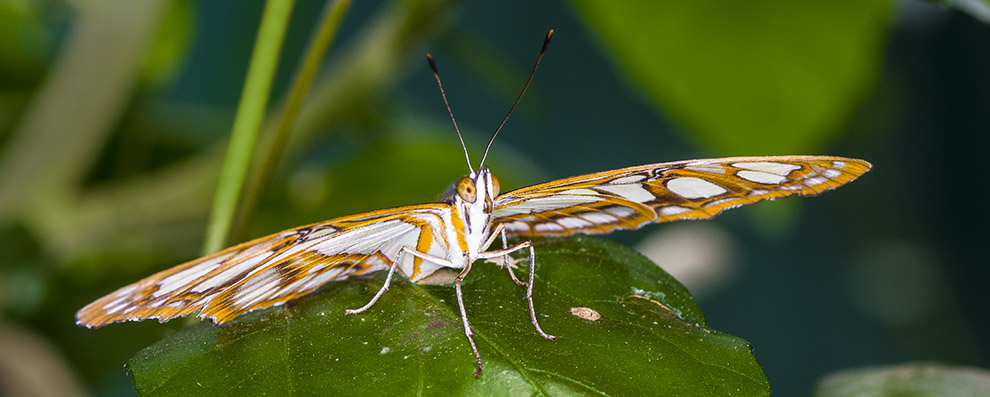

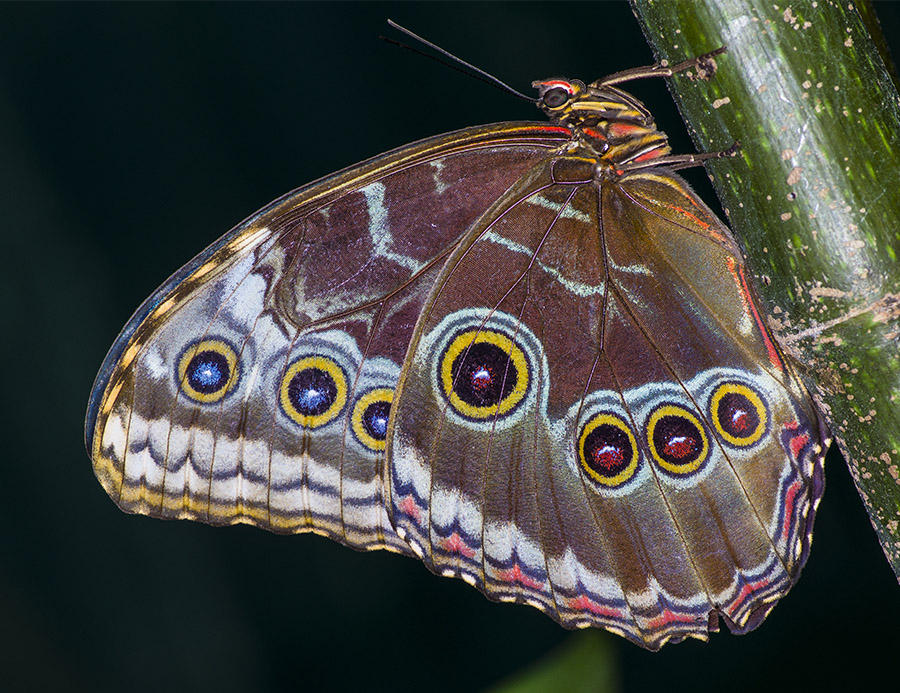
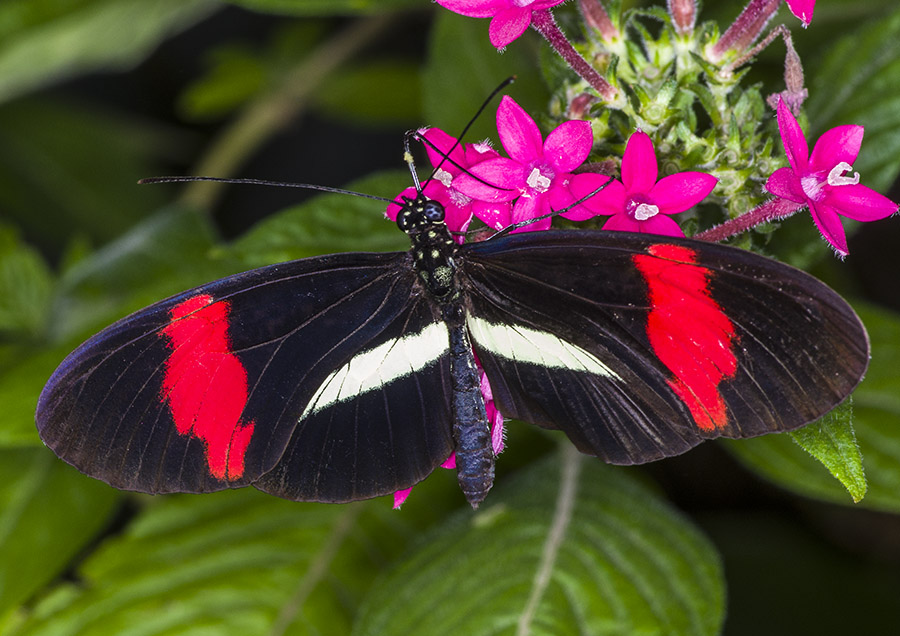

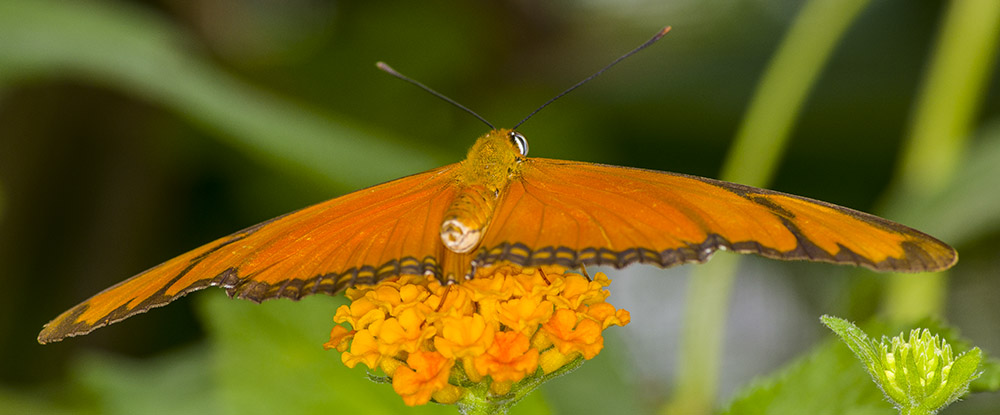
And below, it seems butterflies have many positions for doing that thing. Position 37 is certainly artistically symmetrical.
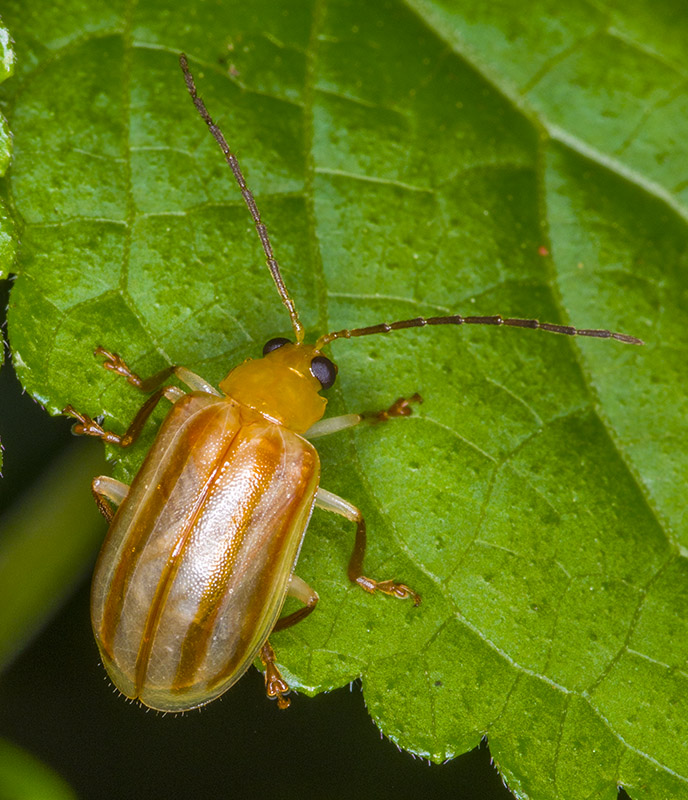
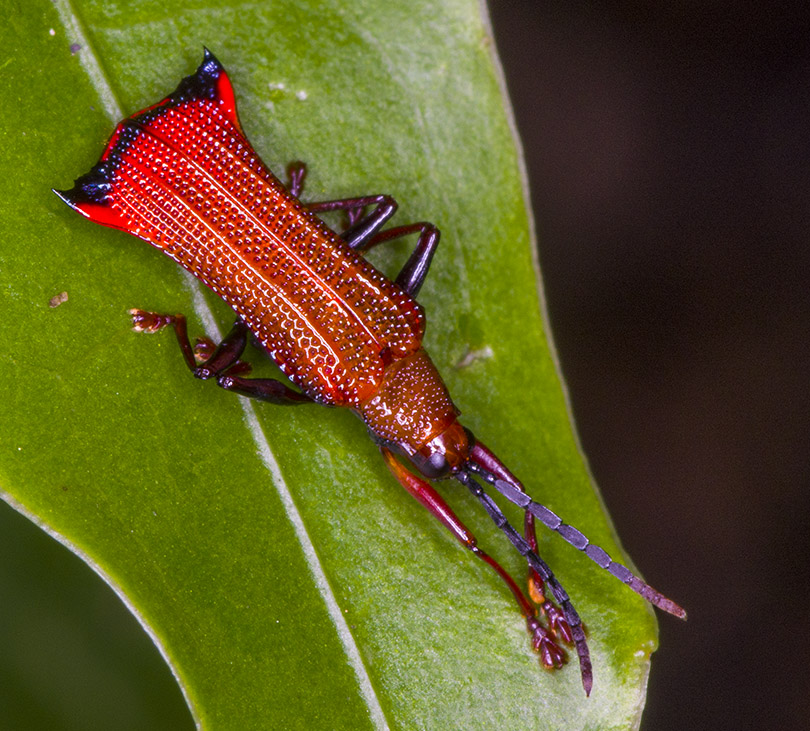
Rainforests have what is known as A LOT of leaves. These leaves and the myriad of insects what want to eat them, are in a constant evolutionary battle – leaves get more tough and poisonous, insects get more resilient. But the forest is sort of winning. Only a fraction of the leaves have bite marks. The most abundant biters, are the aptly named Leaf Beetles, Family Chrysomelidae, with thousands of species here having a go. I have now seen over 40 species in the ground level gloom, but the majority of species of these, and all insects, are in the inaccessable canopy – alas. Below a few of the beetle dudes.



It seems every rainforest ‘park’ has a canopy walk. This one even has zip lines for the fearless, but it also has a serious canopy bridge for the sensible. Many birdies and much mossy canopy is thus glimpsed, with a bit of a sway in the process.

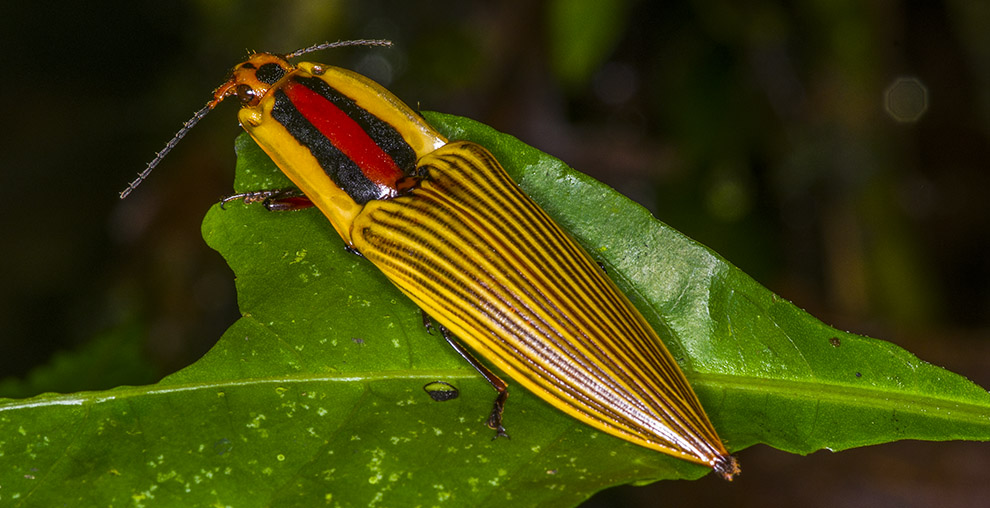
oh and before we leave beetles, just wanted to show you what living too long in Neotropics does to sensible insects. Below, a typical Australian click beetle, Family Elateridae, and a click beetle here that has given in to the silly troppo-land effect. It perfectly explains why I leave Oz and travel to these places.

Last day in the forests. On the way to the refugio saw yet another orchid bee, hovering nicely. Note the long proboscis used for deep orchids and other flowers.

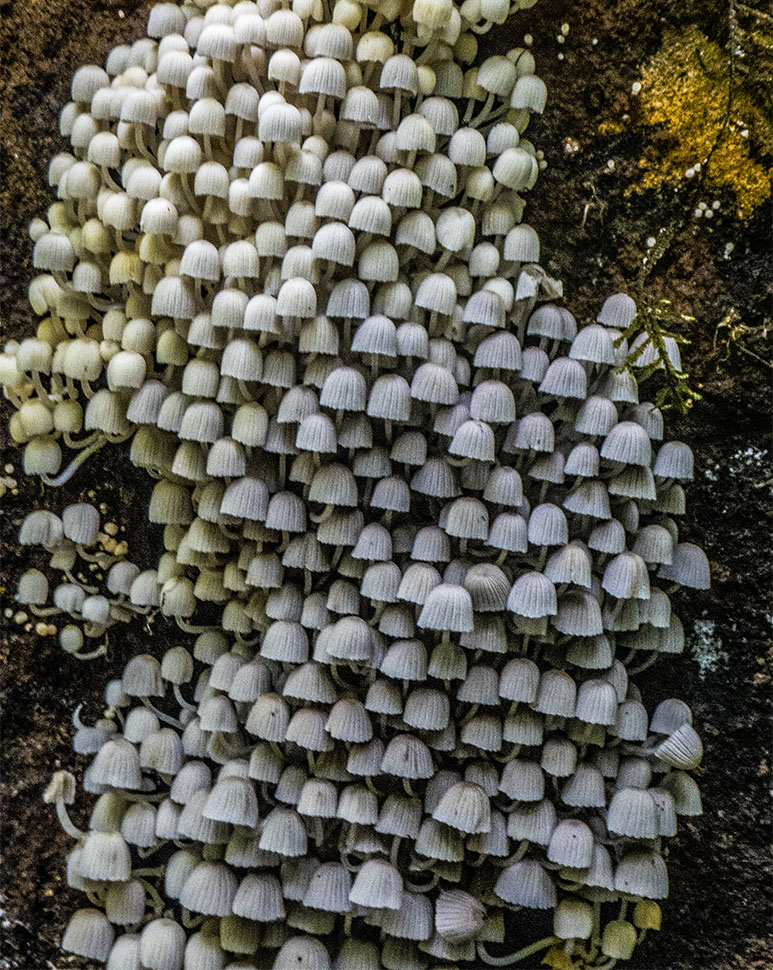
And in the dim wet gloom, we must not forget the fungi kingdom. Not as prolific as in Oz rainforests, but often in riotous mood. Ngaio Marsh, my fav crime writer, once penned a novel called A SURFEIT OF LAMPREYS, which leads me to name the below photo, A SURFEIT OF LAMPSHADES.
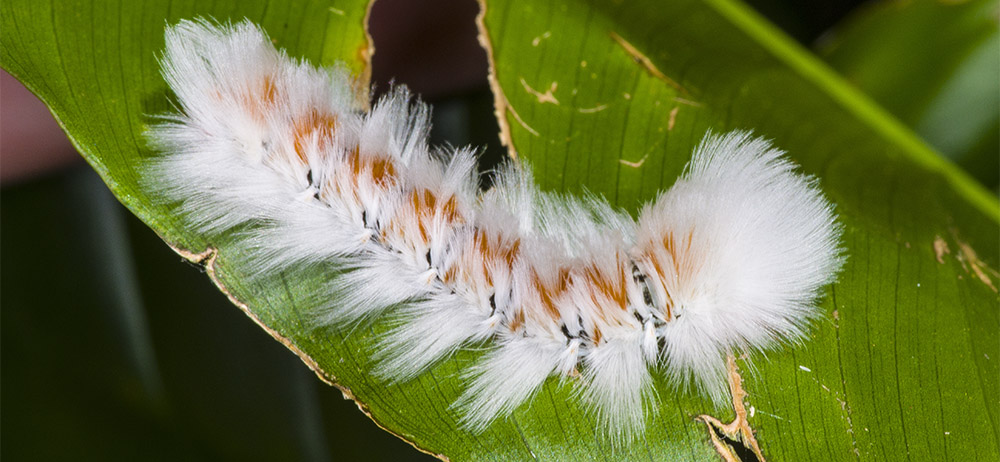
three more pics before the finale. The dome shield bug has that underscribable colour near the blues and greens, while below is a white toothbrush caterpillar.

and below that is a verry skinny relative of weevils, in the Family Brentidae

So to the last story. After a bad day where I spent much time under a small umbrella pretending to keep dry, it was day last, and sunny. I have got to know the head ranger here, and she told me that a very rare event was taking place – someone found an ocelot sleeping in a tree. This is one of the very mostest handsomest puddy tats on the planet. Armed with her directions and my embedded memory of the trails, I found said beast, too dim and dark for pics, but oh so special.
Below a pic of one sleeping in a tree, taken from WIKI, by someone called Danleo. GNU Free Documentation License.

as I get olderish, memories from early life are easier than yesterday, and so this scene brung back a day in primary school, with me still learning english, when a boy told me this idiom: “how do you titilate an ocelot – you ocilate its tits a lot”
I can only assume that the originator of this ditty is now a famous poet. And speaking of poets, the Nobel prize winning Bob Dylan said in one of his early songs “I’m a poet, and I know it, hope I dont blow it”
Goodnight fellow travellers in this blog. I now face a 44 hour trip back to Oz.
 SIX-LEGS-GOOD